
Remember when the BCS was a constantly debated, hot-button issue? When people were upset about how a computer system could possibly determine who would play for the national title. Well, enter in the GHSA Post Season Rankings. And to add to it, the GIAA rankings as well.
For years, decades even, the GHSA followed the traditional model of breaking down how teams made it to the playoffs, regardless of sport. They’d start with classifications, then eight regions per classification, followed by the top four teams in each region making the playoffs. A region champion would host the 4th seed from another region. The region’s two seed would host the other region’s three seed. Upon advancing, the higher seed would always host. If they shared seeding in their regions, it would be determined by a coin toss.
Starting in the school year of 2024-2025, the GHSA decided to slowly roll out something different. Their own Post Season Rankings, commonly monikered as the GHSA PSR. It was kept to the lower classifications, Class AAA and below, as a sort of test run to see how it would grade out. This school year, 2026-2027, would be the first year where all classifications would follow the PSR.
There are three factors that go into how placements are made in each respective classification. The first is Winning Percentage (WP), which is said team’s record throughout the season, and accounts for 35% of the rating. Secondly, is the team’s Opponent’s Winning Percentage (OWP). This puts each of the team’s opponent’s records into the equation, basically another way of naming the strength of schedule, and is 30% of the rankings mathematics. Lastly, we have the Opponent’s Opponent’s Winning Percentage (OOWP). In lamen’s terms, this is basically each opponent’s strength of schedule, and rounds out the last 30% of the arithmetic.
Sounds simple enough, right? Three factors, almost at an even third of the total tally to make up the final number. That’s where it can be a little bit deceiving. Some of the higher performing teams that are nationally ranked, or perennial powerhouses, actually end up being hurt in this process. Teams like Buford, Grayson, Creekside, etc., play teams that outside the GHSA. For a win outside of the GHSA, they only get 90% of the credit. To now break that down; if a team plays ten games, finish 10-0, and only played 8 GHSA teams, their win total to the PSR would be 9.8 instead of a 10. Those two-tenths of a point can be a drop in the rankings, even if that team beat a top-ranked team from another state.
Throw in the OWP, and there comes another little wrench in the rankings factor. At first, the winning percentage of the opponents will not factor in their record against the team being ranked. To explain, let’s use Carver and Spencer, who played each other earlier in the season. Carver is 5-4 at the moment while Spencer is 6-3. Carver is in a potential playoff push at the moment. To find Spencer’s winning percentage, so that it counts in Carver’s OWP, it will count all of Spencer’s games against GHSA teams, except for the Heritage Bowl loss to the Tigers. That would make Spencer 6-2, with a .750 win percentage. Right? WRONG! Now you have to also factor in the fact that Spencer had an away game against Brookstone, who is a GIAA program, and not a member of the GHSA. So now Spencer would actually be 5.9-2. With a win percentage of 0.7375.
And it continues to go on from there, with the OOWP. The numbers just continue to make it so that a team could drop in rankings due to their opponent’s schedule. So programs are now feeling the downside of playing against teams outside of the GHSA, even though they can be of monetary benefit for the school, and sometimes nationally televised. Instead of the rankings being determined by play on the field, we’re now having to look to the works of Pythagoras to truly understand the concept of the computer system.
That’s where we can truly understand the argument for some of the state’s top programs. To quickly analyze, we can look at the GHSA’s top classification, 7A, and the top 3 of their rankings. As of today, Valdosta High sits at Number One in the PSR with a record of 9-1. Looking two spots down at Number Three, we see Lowndes High at 10-0. Not too crazy, right? Except Lowndes just handed Valdosta their lone loss of the season. And they sit two spots behind a team that they are going to beat out as region champions. Why, do you ask? Because of the OWP. Lowndes has three wins against teams that are below .500 compared to Valdosta’s one, as well as two wins against Florida teams that only count as 90% of a victory. Also, they don’t factor into the OWP because they are not GHSA schools.
We can then delve into the placement of region champions. In years past, if you win one of the right regions in your classification, you were guaranteed a potential two home playoff games as one of the top eight teams. With the new seeding, region champions are only guaranteed a Top 16 finish. That’s one home playoff game. As a region champion. You could be on the road in the second round to face another region’s three-seed. Personally, I see this as a huge flaw in the equation. Some region champions will be punished because the bottom half of their region had some really bad teams. Teams that they are forced to schedule.
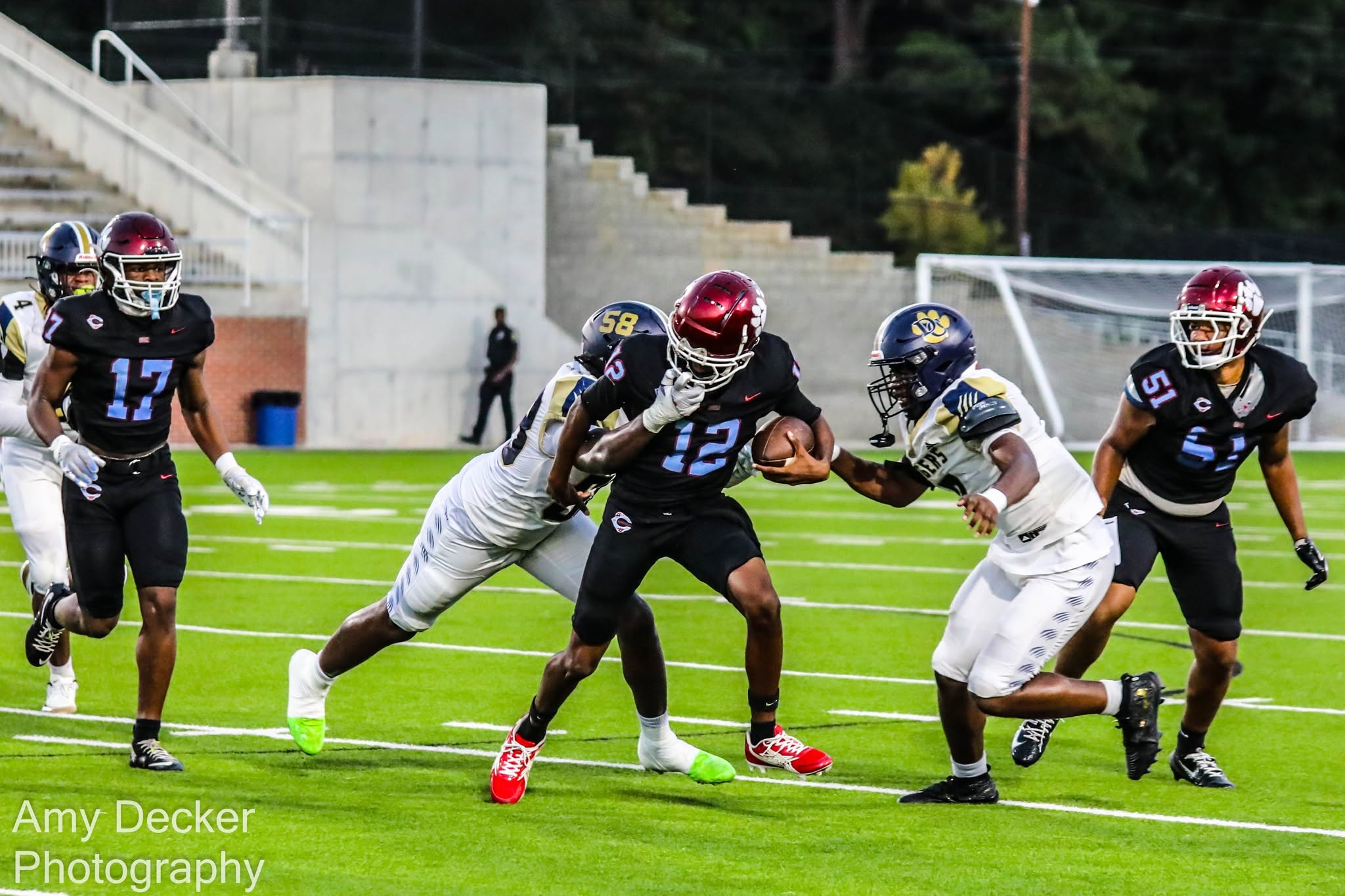
Going back to Carver of Columbus, they could easily be a victim of this. They played a non-region schedule that consisted of numerous playoff teams. The one non-region opponent that won’t be in the playoffs, was due to ineligible players and forfeitures. The Tigers will play a de facto region championship game this weekend against Worth County, and potentially finish their region undefeated. Not to mention, being back to back state champions. All of this should have Carver sitting pretty, right? Instead, they sit at Number 24 in the PSR. What that potentially means is that Carver will go undefeated in their region, win the region title, and are only guaranteed as much as eight more spots and a 16 seed, where they’ll host one playoff game before going on the road the next round and facing the top-ranked team in the state. That’s a massive failure by the system.
We see it in every classification, where teams are hindered by their OWP, OOWP, especially by teams that they have to schedule within their own region. Is the entire computer-generated system a failure? I don’t believe so yet. It could use some tweaks, but it adds some excitement to the playoffs. Rivals could face one another. You’ll see some regions with six teams in the postseason. So, yes, that part can make for some new flare to the season. It also means head coaches have to be more strategic in their scheduling each season. It can work eventually. At the moment though, the infancy of the GHSA’s PSR is in dire need of some progression. We can only wait to see if the guys in Thomaston can get it right.