
As I write this edition of Mic2Mike, it is Tuesday, October 20 and a beautiful fall evening. This week’s column is my musings from all over. Let’s see how many squirrels we can chase, shall we?
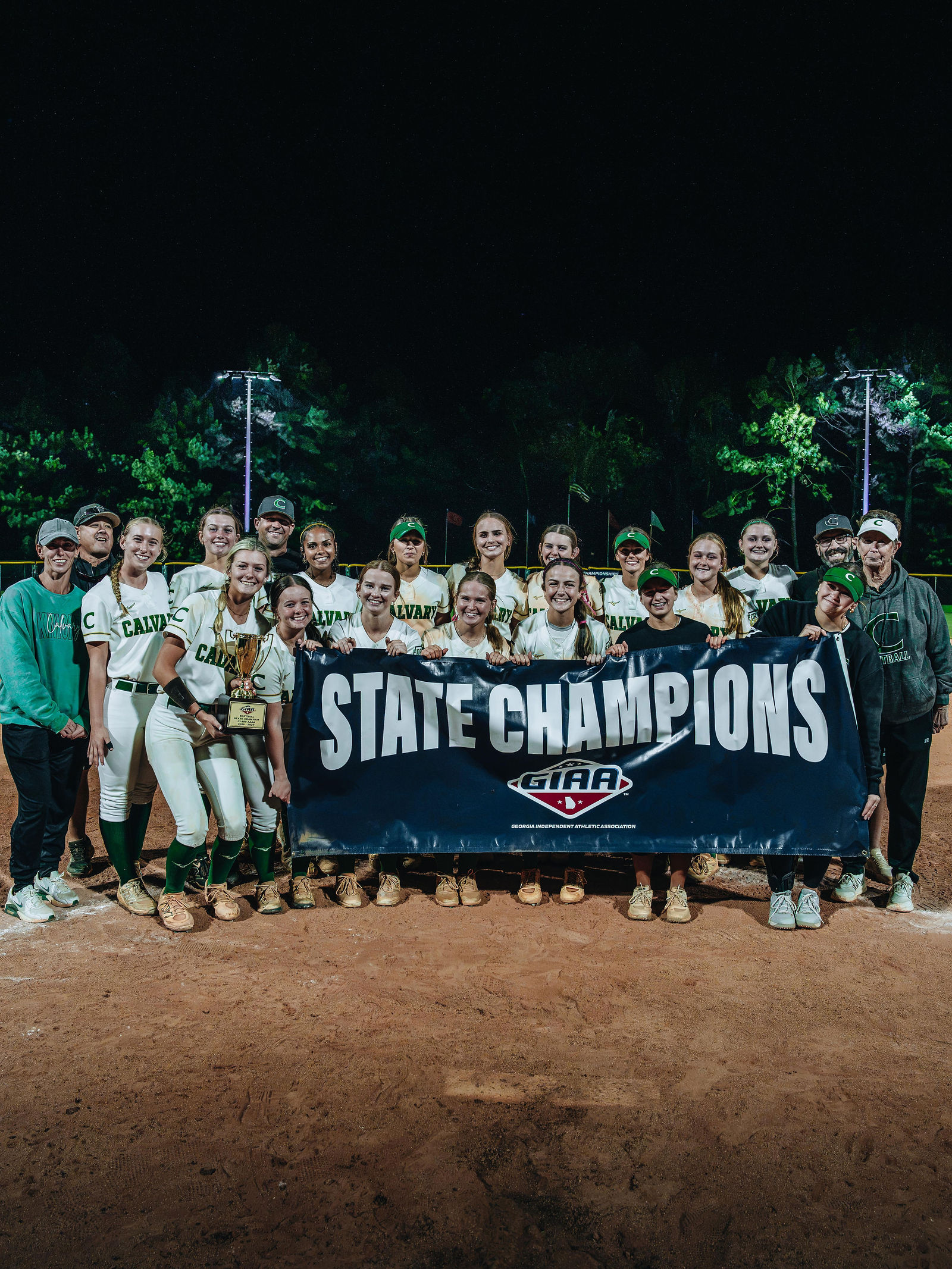
Congratulations are definitely in order for Coach Jeff Halstead and his Calvary Lady Knights softball team. Still a very young squad with only one senior, the team outlasted Tattnall Square on Saturday night to win their second GIAA state title in a row. With most of the team returning, they probably are not done bringing home the hardware.
The team got a gritty pitching performance from sophomore Reagan Terry. The lefty came into a bit of a jam in the first inning and went the distance. That was huge on a day when the top two arms for the Lady Knights were struggling a bit with control, Also huge was Belle Graham, another sophomore (notice a theme?). Graham homered in the loss to TSA to force the if game, and ripped a double to lead off the seventh and start the game-winning rally. She scored the tying run on another double by, you guessed it – sophomore Maddie Davis. Ellie Stokes (yes, a sophomore) scored the championship run on a wild pitch. The future is indeed bright at Calvary.
While on the GIAA state championship theme, let me just say what a blessing it is to be a part of the Varsity Sports Network family. I was fortunate to be either doing play by play or color commentary on three of the four championship games. But the bigger blessing was watching the crew of guys – and it takes a lot from camera work to production to talent – to broadcast a top-tier event. The guys were fantastic and we had fun doing it. What has been built and continues to grow with this group is amazing and is only getting better.
On to college football. Saturday was an eventful and interesting day all over the country. Ohio State came inches away from Indiana pulling out a comeback win. Tennessee lit up cigars in Knoxville with a big win over Alabama, BYU surprised Notre Dame, Kentucky continued to turn heads with a win over Missouri, and Arkansas got in the SEC win column. My personal favorite was getting to see Alex McPherson boot the game-winner against Georgia. Yes, I am an Auburn fan. But it was bigger than that. The story behind that kid and all he has been through is nothing short of miraculous. And to see how he has handled the good and the bad through it all, never failing to thank God and express is faith. That is way bigger than any game.
Major League Baseball has its final two teams and not many would have picked these two back in April when the season started. Milwaukee has not had a World Series title since the mid-50s when they were still the Braves. Tampa has had success but they have been up and down more than a thermometer in October in Georgia. I am looking forward to it and I am going to be pulling for Milwaukee.
I want to give a tip of the cap to high school football and the fun it provides. First, in what may have been the biggest news to come out of Friday – mighty Thompson lost to Prattville 28-27. I was not sure they would lose a game this season. The Central Red Devils continue to roll and they will be right in the mix for a state title. Northside and Coach Brycen Freeman grabbed another win over Tri-Cities, continuing a storybook year. Carver is starting to look like Carver as the region schedule is in swing now. Lastly, congratulations to Brookstone on a big win over Pacelli. It was a classic brawl for the Brocelli Jug. I may or may not have forecast that Brookstone could very well win that game because of the way they had improved as the year moved on. Those are just the ones who caught my eye.
As I close this week’s thoughts, the sounds of basketballs bouncing are starting to be heard. It will not be long until all levels of basketball get underway. There is still a lot of football to play, but hoops are coming and we will be there for it. Back in the day, I could shoot that rock. Those were the days.
Until next time, that is my view from the Perch.
Author: GASL Staff
-
One Last Game, One More Championship: Calvary Sends Gumm Out on Top
Calvary Makes It Interesting—and Makes It Back-to-Back
By: Ricky Rogers
The Lady Knights answered three deficits to repeat as GIAA AAAA champions, finishing a 25–3 season with a young roster, a shared belief and one unforgettable farewell for senior Kendall Gumm.
Apparently, Calvary likes a little suspense with its state championships.
A year ago, the Lady Knights dropped the opening championship game before beating Strong Rock Christian in the deciding contest to claim the GIAA Class AAAA title.
On Saturday, the defending champions returned to familiar territory. Tattnall Square Academy had taken the first game of the championship round. Calvary would need to win one more to keep its trophy.
Then the Lady Knights made things even more interesting.
They fell behind in the first inning. They fell behind again in the second. After pulling even in the fifth, they surrendered the lead once more in the sixth.
By the bottom of the seventh, Calvary was down to its final opportunity to answer.
The Lady Knights answered with a double, a bunt, another double and, eventually, a sprint home that ended the season exactly where they had hoped.
Ellie Stokes scored on a wild pitch with Kendall Gumm at the plate, completing a 4–3 comeback and securing Calvary’s second consecutive state championship.
A team with only one senior and three juniors finished 25–3. Its three losses came against Class 6A Lee County and Tattnall Square, which split two regular-season meetings with Calvary before forcing Saturday’s deciding game.
There was nothing easy about the final victory.
There was, however, something familiar about how these girls handled it.
“I kept reminding the girls to just keep playing, and we even talked about how we were in the exact same situation the year before,” head coach Jeff Halstead said. “I kept telling them our moment was coming and that we had not had any breaks yet, but our break was coming so just keep playing hard and trusting in that.”
One more answer
Calvary’s first response came from a freshman.
With two outs and runners at first and second in the bottom of the first, Ally Halstead drove a double down the left-field line. The ball struck the fence, bringing home a run and tying the game at 1–1.
Her coach had watched her settle into a productive stretch over the final weeks of the season and into the playoffs. In that moment, he liked Calvary’s chances.
“When she hit it, I thought it had a chance to get out, but it hit the fence and bounced right back to the left fielder so we were only able to score the runner from 2nd base,” Halstead said. “Either way, it still turned out to be a huge momentum swing in the game and a big first run on the scoreboard for us.”
It also kept Calvary close against a team that was making every inning a challenge.
The Lady Knights needed another timely swing in the fifth. Trailing 2–1, they got it from Gumm, whose single up the middle brought home the tying run.
Calvary’s lone senior had helped extend the championship fight in the final game of her high school career.
By the sixth, the Lady Knights were behind again, 3–2. This time, their next response would have to come with almost no room left.
Halstead said the circumstances never changed the mood in his dugout.
“These girls never lost the belief that we were going to win the game,” he said. “They were high fiving, saying ‘let’s go,’ and just trusting in each other the whole time.”
Most of the players had been together since middle school. Their confidence had developed through years of practices, games and situations that required them to depend on one another.
Saturday tested that trust. According to Halstead, it never broke.
“I think we all knew Tattnall was playing incredibly well and was giving us all we wanted, but it never felt like there was a moment where we lost hope,” he said.
Before the seventh, there was no elaborate speech. Halstead delivered the usual reminders, then headed toward the third-base coaching box.
Along the way, he prayed.
“I’m not someone who thinks God has a favorite team and that He wants us to win, but I did want Him to know that we would trust Him either way,” Halstead said.
That perspective is part of the program’s foundation. Halstead talks with his players about faith, about enjoying the opportunity in front of them and about continuing to play without knowing how a game’s story will end.
This one still had plenty left.
Belle Graham came off the bench and opened the seventh with a pinch-hit double to right field.
Stokes followed with a push bunt, reaching on a single and moving Graham to third. The tying run was now 60 feet from home, and the winning run was aboard.
For Halstead, the bunt was the turning point.
“My favorite memory of the 7th inning was actually the push bunt by Ellie Stokes,” he said. “When that happened, it was at THAT moment that I truly believed we would win.”
Stokes advanced to second on defensive indifference, bringing Maddie Davis to the plate with both runners in scoring position.
Davis had struggled offensively that night. Halstead’s confidence in her remained intact.
“As for Maddie, the moment is never too big for her,” he said. “She’s a competitor.”
Davis delivered a double to center field. Graham scored, tying the game at 3–3, while Stokes reached third.
An intentional walk to Charleigh Spann loaded the bases.
That brought Gumm to the plate.
For a team with one senior, there was something fitting about the championship reaching its final moment with her in the batter’s box.
“First of all, I found it very fitting as I watched our only senior, Kendall Gumm, walk to the plate with the bases loaded and the championship game on the line,” Halstead said.
The next pitch skipped into the dirt and past the catcher.
Halstead sent Stokes home.
“I immediately just started yelling for Ellie (Stokes) to go, and I started jumping up and down out of excitement for our girls and what I knew they had now accomplished by winning their second straight state championship,” he said.
Three deficits. One final rally. Another championship.
The work that made the rally possible
The seventh inning supplied the finish. Calvary’s pitching, defense and baserunning had kept that finish within reach.
Spann collected two hits and stole two bases. Ally Halstead also had two hits, and the Lady Knights stole four bases altogether.
“That is Charleigh’s game,” Halstead said. “Her speed and ability to put pressure on the defense with her bunt game are unmatched.”
Calvary also played an error-free championship finale and turned a double play. Every cleanly handled chance helped preserve the opportunity to catch up.
“As for our defense, that is the most important part of the game to us and what we work on the most,” Halstead said. “Everyone loves to hit, but hitting comes and goes, so you better be able to glove it in those times when your offense isn’t clicking.”
In the circle, sophomore Raegan Terry gave Calvary seven innings, struck out three and earned the victory.
She had spent much of the season behind a senior and a junior who handled most of the pitching. In the final weeks, though, Halstead had seen her throwing well enough to feel confident giving her a bigger assignment.
Saturday supplied the biggest one available.
“When I put her in the game, I looked at her and said, ‘This is your time kid. Now, go win us a state championship,’” Halstead said.
Terry smiled and answered, “yes sir.”
Halstead saw a pitcher ready to compete.
Through a close game against a difficult lineup, Terry concentrated on executing pitches and working with coach Jill Carlson. Her teammates handled the defense behind her.
“You could tell she just really focused on executing pitches and trusting Coach Jill (Carlson) to make the right calls,” Halstead said.
Terry’s performance also captured a central truth about Calvary’s championship run: the player carrying the team could change from one day to the next.
McKenzie Jones had been dominant throughout the season and had shined during Thursday’s and Friday’s tournament games. Saturday was more difficult for Calvary’s ace.
Terry and Gumm helped pick up the pitching effort, giving the Lady Knights a way through the day.
Jones’ season remained a major reason Calvary had reached that opportunity. According to Halstead, she averaged more than two strikeouts per inning and continued developing the movement that made her so effective.
“She has really refined her craft and become one of the most dominant spin pitchers in the entire state,” he said.
Jones will return as a senior next season. Halstead is eager to see what comes next, both at Calvary and beyond.
“She’s an absolute stud in that circle, and she just continues to get better every single year…and on top of all of that, she’s a GREAT kid and a GREAT teammate,” he said.
On Saturday, those teammates had an opportunity to return the support.
Terry’s complete game allowed Calvary to keep answering. The final rally gave her performance its championship ending.
“A lot of stock will be put into what we did offensively in that last inning, but without Raegan stepping up in that game, we don’t win the championship,” Halstead said.
A role worth waiting for
Graham’s championship day began with a place in the starting lineup and ended with a different assignment.
She went 3-for-4 across Saturday’s two games, scoring three runs and driving in two. In the opener, she hit a two-run home run in the fourth inning.
Her success against that pitcher was familiar. Graham had also homered against her during the regular season, helping convince Halstead to start her in Saturday’s first game.
For the finale, he held Graham back.
It was a deliberate decision to preserve an offensive option for a late situation. When Calvary reached the seventh inning needing a run, that option became the beginning of its comeback.
“She was the one who got it all started in the 7th inning with the clutch pinch-hit leadoff double to get the rally going,” Halstead said.
The moment fit the player he had come to know.
“First of all, Belle Graham is one of the best teammates and one of the most selfless people I have ever coached,” he said.
He described someone willing to fill whatever role the team needed and eager to encourage everyone around her. Saturday required her to contribute in two different ways. She produced in both.
“What a moment for our team, and what a moment for her…and she deserved that moment as well as all of her success this season because she is so selfless and is truly a team first kid who will do whatever it takes for us to be successful,” Halstead said.
Ally Halstead added another example of the young roster’s ability to deliver. The freshman went 4-for-7 over Saturday’s two games and stole two bases, contributing both immediate offense and a glimpse of what Calvary can bring back.
The future holds promise. Saturday demonstrated how much work it will take to keep winning.
Halstead credited Tattnall Square and coach Jordan Brooks for pushing Calvary to the edge.
“Those girls played their tails off and pushed us to the brink, and they were equally deserving to win a championship based on how they played towards the end of that tournament,” he said.
The closeness of the finish gave his players another lesson to carry forward.
“Championships are earned and they are never easy,” Halstead said.
One last time with Kendall
For most of Calvary’s roster, Saturday’s championship becomes part of the experience they will bring into another high school season.
For Gumm, it was the final game.
She will move on to Columbus State University, taking a powerful left-handed bat, a left-handed pitching arm and the versatility that also allowed her to contribute in center field.
Calvary will have positions and production to replace.
Halstead will miss the person who filled them.
“I’m going to miss her smile, her sense of humor, and her love for softball and life,” he said. “Kendall and I have developed a very close relationship over the past couple of years, and both my wife and I have grown to love her like a daughter.”
Her place within this young team carried responsibility. Gumm was Calvary’s only upperclassman in 2025 and its only senior this season. Halstead challenged her to become a leader, and he watched her embrace that role on and off the field.
“Kendall Gumm is one of the most steady people I know, regardless of age,” he said.
Some of his favorite examples came when attention turned toward her individual accomplishments.
In interviews and media appearances, Halstead noticed Gumm finding ways to acknowledge her teammates. When given an opportunity to talk about herself, she talked about the girls beside her and how much she valued taking the field with them.
“Kendall is a perfect example of a true leader because I believe real leaders always take more than their share of the blame and less than their share of the credit,” Halstead said. “That’s who Kendall is, and we are going to miss her more than she will ever know.”
Her influence, he believes, will remain with the program long after the next lineup is written.
She showed younger players what working toward a college opportunity could look like. She also set an example through her faith, her schoolwork and the way she treated people.
“I think we will see her influence on this program for many years to come, not just 2027,” Halstead said. “She will leave behind a legacy at Calvary and an example for so many young ladies to follow for many years into the future of this program.”
He hopes she takes that same faith and championship mindset to Columbus State. He is looking forward to watching her compete there and seeing the next stage of a journey he helped shape.
For now, her Calvary career has an ending worth keeping.
A fifth-inning single that brought her team even. One last trip to the plate with the bases loaded. A teammate racing home with the championship run.
The final game demanded contributions from across the roster, and that suited the senior who so often directed attention toward everyone else.
Calvary entered the season as defending champions. It finished with another trophy, a 25–3 record and a young team that had learned how to win together under the greatest pressure its season could offer.
Gumm leaves as part of that story—and part of the people who will carry it forward.
“Beyond her incredible talent on the field, Kendall is simply an amazing young lady in every aspect of her life,” Halstead said. “She has definitely left an impression on me and on our entire program that will last a very long time.”
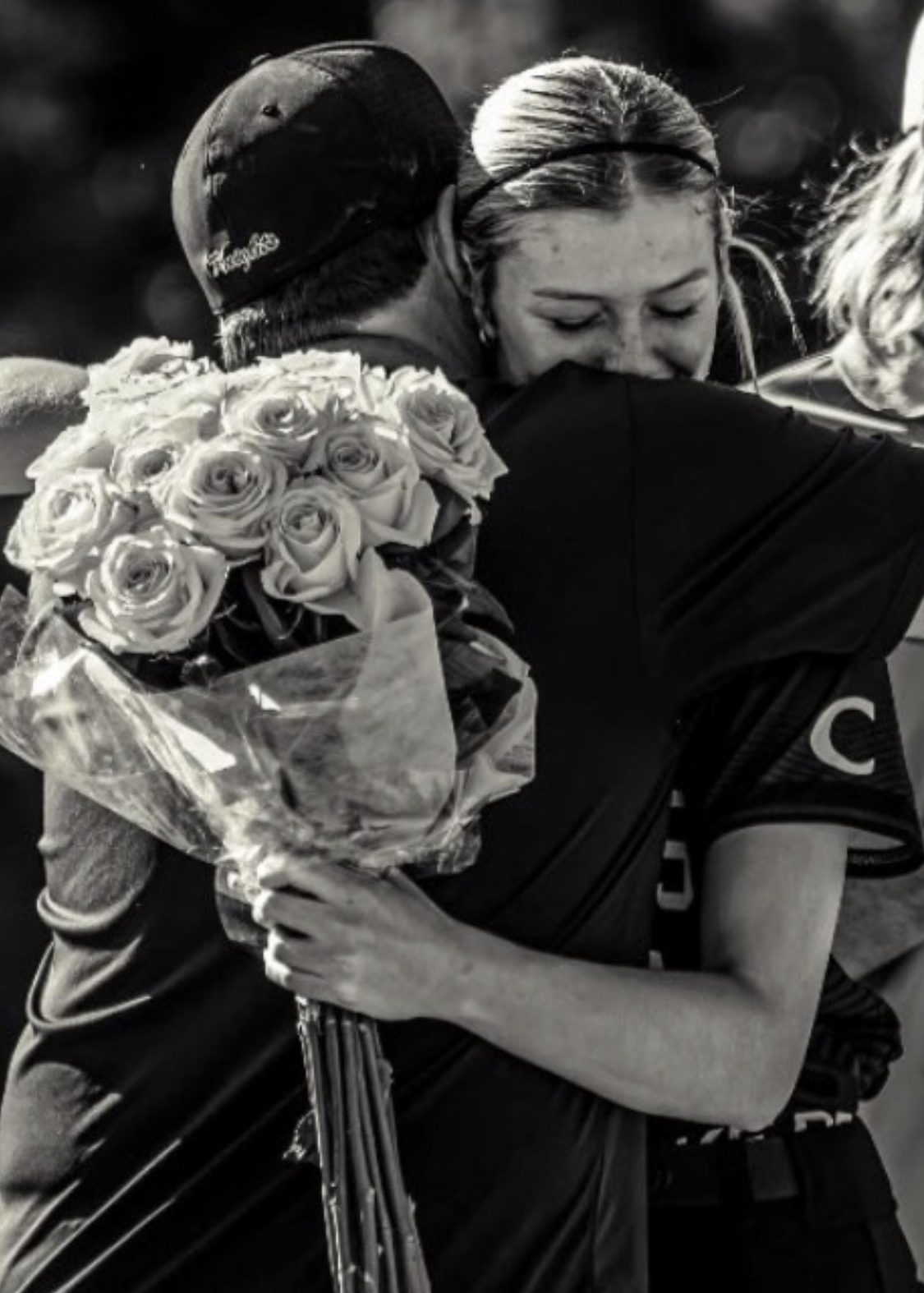
Calvary’s lone senior, Kendall Gumm, embraces head coach Jeff Halstead during Senior Night on Sept. 17, 2026. Gumm capped her high school career a month later by helping the Lady Knights win their second consecutive GIAA Class AAAA state championship. Photo courtesy of Coach Jeff Halstead. -
PAYING THE PRICE. WHO PAYS TO PLAY?
By: Ricky Rogers
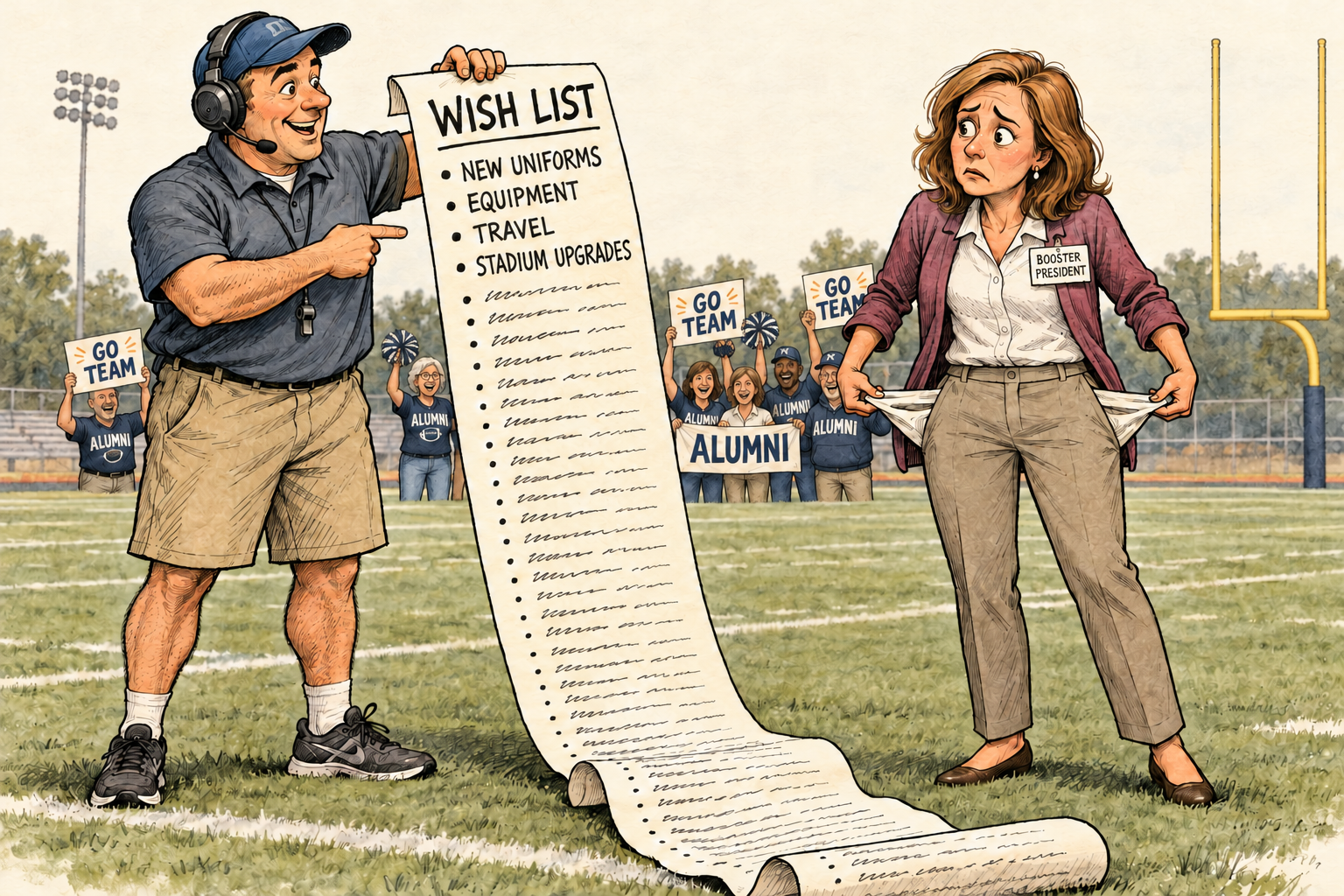
Behind every uniform, team meal and maintained field is a bill—and an opportunity for alumni to give back.
A football helmet. A dozen baseballs. A meal before an away game. Even the detergent used to wash uniforms.
The price of high school athletics reaches well beyond the ticket purchased at the gate. Behind the games are expenses that coaches, families and volunteers must find ways to cover, often through fundraising that receives far less attention than the final score.
“When I first started volunteering I had no idea of how much money it cost to run the baseball team” says Jason Elrod, president of the Northside Patriots Baseball Booster Club from 2021 through 2024. “That was very eye opening.”
His experience reflects a central theme in interviews conducted with a local coach, an athletic director and previous and current booster club leaders: providing students with an athletic experience requires resources—and people willing to help secure them.
For school alumni, that need presents an invitation. The programs that helped shape your memories are working to create those same opportunities for another generation. They could use your help.
The bills behind the game
Player fees can seem like a substantial deduction from a family’s budget. Yet those payments may cover only part of a program’s expenses.
“The fees the players pay each year covers about 1/3 of the overall cost,” Elrod says of his experience at Northside.
Fundraising helped meet the remaining needs while supporting improvements to facilities and the game-day experience. During his tenure, booster purchases included baseballs, rakes, winter rye grass, batting-cage nets, uniforms and turf for the hitting facility. The club also supported locker room renovations, concession equipment, meals and hotel rooms for away games.
Elrod credits the school system with helping where it could, while explaining that many needs still depended on fundraising.
“Without a good booster club a lot of those things wouldn’t be possible,” he says.
Northside baseball head coach Tracy Powell sees that support in the daily care of his players. Boosters provide meals when the team travels out of town and protein bars for local games.
“At Northside our booster club has been phenomenal during my three years,” Powell says.
He also points to an expense spectators can easily overlook: maintaining the field.
“The one that I feel that gets overlooked by most is the cost of maintaining a good playing surface for your players,” Powell says.
Mower fuel, equipment maintenance, labor, weed-control treatments and winter rye seed all belong in that budget. Even baseballs illustrate the change: Powell recalls paying approximately $30 for a dozen game balls in 1996 and estimates that the cost has nearly doubled.
The playing surface fans admire and the supplies athletes use reflect spending long before the first pitch.
Different schools, different pressures
At Russell County, athletic director Larry Knox describes an arrangement in which each sport must generate its own operating funds.
“At Russell County, each sport is responsible for raising the funds necessary to operate its program from the beginning to the end of each school year,” Knox says.
Football and basketball do not subsidize the other teams, he explains. Financial planning and fundraising consequently become responsibilities for each coaching staff.
Knox says operating costs have increased significantly over the past four years. The department has added teams, more programs have advanced to state playoffs, and uniforms and equipment have become more expensive. Postseason success creates additional travel, meals and other expenses.
Adding opportunities also requires a commitment beyond announcing a new team.
“We must ensure that we have the financial resources to support the program adequately and provide student-athletes with a positive and meaningful experience,” Knox says.
In his interview, Knox reports that Russell County currently has no booster clubs supporting its athletic programs. He sees their potential value, provided volunteers and coaches work toward shared goals.
“For a booster club to be effective, there must be dedicated individuals willing to invest their time and effort into raising funds for the team,” he says.
Elsewhere, a source identified here as Current Local Booster Club President describes a football program that depends on boosters for expenses spectators might assume the school covers.
“Our booster club covers all of our football program’s expenses, including many things people might assume the school pays for: uniforms, helmets, footballs, field paint and other essential equipment,” the president says.
That responsibility extends to meals, snacks, drinks, laundry detergent, banquets and senior gifts.
The president also describes financial limitations among families.
“Many families simply do not have the income to cover the costs of athletic participation.”
These interviews reveal a stark difference in funding arrangements and different levels of support. They also show why community involvement matters: a program’s needs do not disappear when its families have limited money to contribute.
Volunteers pay a price, too
Money is only part of the equation.
Someone must organize the fundraiser, coordinate volunteers, communicate with coaches and keep the work moving.
Elrod says sharing those responsibilities made his role manageable.
“I was extremely lucky to have a great group of parents that had different strengths,” he says. “The group as a whole made my job much easier.”
The Current Local Booster Club President describes a more difficult experience. Conversations with parents about helping rarely lead to participation.
“Getting people to commit their time remains one of our biggest challenges, and we need more consistent participation to support our student-athletes,” the president says.
Alumni support has also been limited, despite the efforts of a small group that regularly attends games.
“But we need broader involvement at our events, in fundraising and whenever our programs need help,” the president says.
That is an opening for former students to return with a purpose. Graduation does not end someone’s ability to contribute, and having a child on the roster should never be a prerequisite for caring.
A wider circle of volunteers can spread the work. Alumni can become part of that circle.
Give the next generation something to remember
For alumni wondering where to begin, contact a coach, athletic director or booster club leader. Ask what the program needs most.
It may be money for equipment or help serving a team meal. It may be a concession shift, assistance organizing a fundraiser or professional skills in bookkeeping and communications. Alumni who own businesses can explore sponsorships or coordinate an appropriate contribution with the school.
These are practical ways to turn school pride into something students can use.
The purpose reaches beyond winning. Elrod does not view financial resources as necessarily creating a major competitive gap at the high school level, but he believes they matter to the experience athletes receive.
“I do believe that financial resources from booster clubs can make a huge difference in an athlete’s experience while playing ball at the high school level,” he says.
The Current Local Booster Club President expresses a similar hope for students facing challenges at home.
“Athletics should give these kids opportunities to grow, build confidence and succeed, but that takes resources.”
Alumni know what it means to belong to a school. Many can still name the coach who challenged them, the teammates who became friends or the season they will never forget.
Today’s students deserve the chance to build memories of their own.
The next time your school’s teams ask for help, answer with something concrete. Give what you can. Offer your time. Bring another alumnus with you.
Help carry the price to play. Help make memories.
-
Flying the Flag: The Rise of Flag Football, and the Programs Setting the Pace
By: Ricky Rogers
There was a time when the gridiron belonged almost exclusively to the boys. The helmets, the shoulder pads, the marching bands, and the roar of the crowd were all part of a football tradition that has defined communities across the Chattahoochee Valley for generations.
But something is changing.
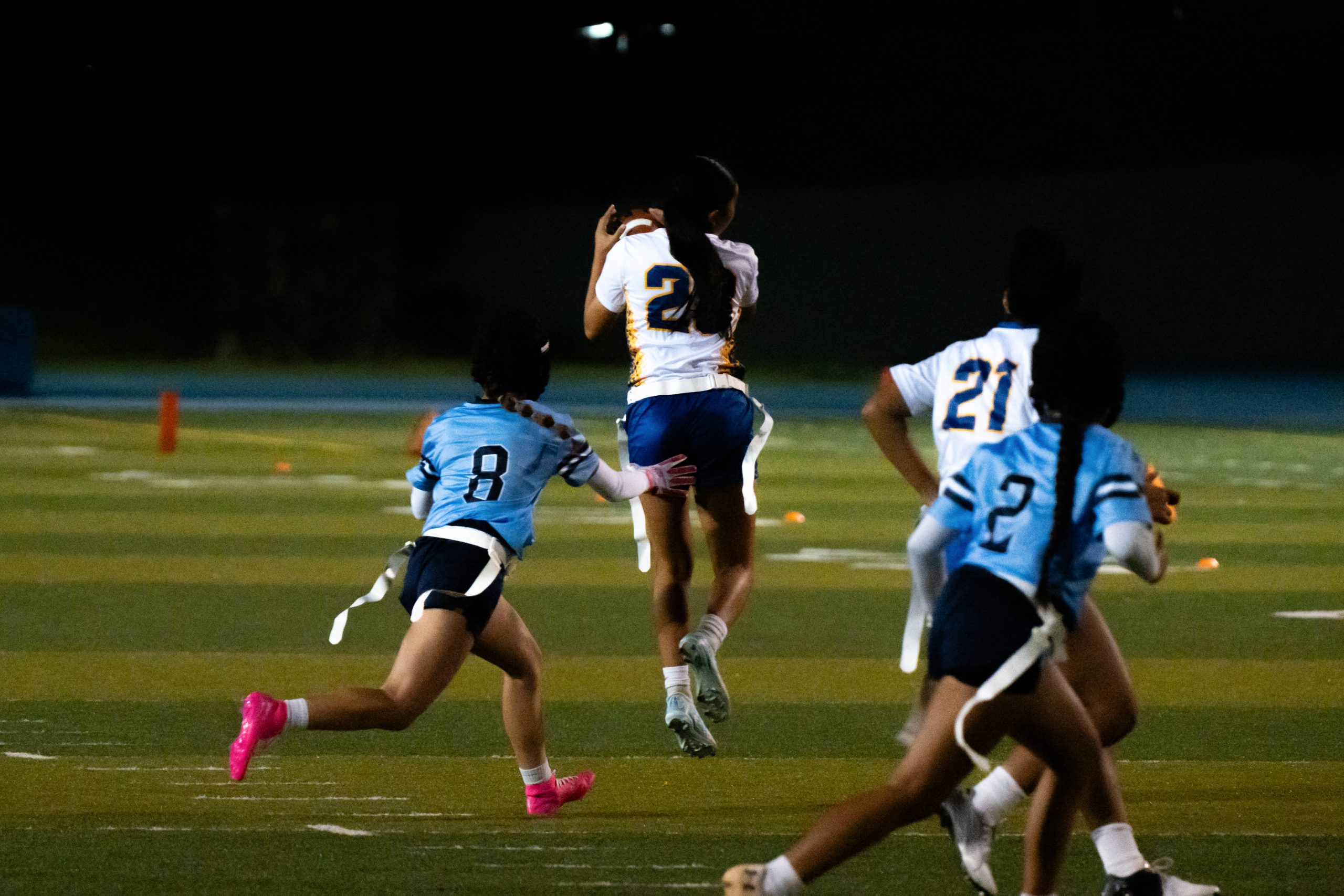
Across the region, a new generation of athletes is taking the field, throwing touchdowns, making game-saving defensive stops, and building traditions of their own. They aren’t wearing helmets or shoulder pads, but make no mistake about it. These young ladies are playing football, and they’re proving they belong.
Girls flag football is no longer simply an emerging sport. It’s becoming an important part of the high school athletic landscape, creating opportunities that barely existed a few years ago.
And here in the Chattahoochee Valley, the evidence of that growth can be found in two programs at very different stages of their journeys.
At Columbus High School, head coach Chris Grier has spent seven years building the Blue Devils into a championship-winning program that has helped establish the standard for excellence.
Just a few miles away, Calvary Christian School head coach JD Roberson is experiencing the excitement, challenges, and growing pains of building something entirely new.
One program is defending a tradition. The other is creating one.
Together, they tell the story of a sport whose future may be even brighter than its remarkable beginning.
But before either program could build its own tradition, someone had to open the door. In 2019, the Atlanta Falcons approached Muscogee County Schools about joining a Georgia pilot program intended to bring girls flag football into the state athletic association. Jeff Battles, then the district’s citywide athletic director, saw a chance to give female athletes another stage on which to compete.
“We have some amazing young female athletes in our school district who have excelled at a variety of sports, and this was one area where I knew we could succeed,” Battles recalled.
The first challenge was winning support from school administrators. Student interest surveys helped make the case, and professional development sessions prepared coaches to teach a game with rules different from tackle football. Battles remembers visiting practices before the first games and seeing players and coaches committed to learning.
“Everyone was serious, everyone was trying to learn and get better. That is when I knew that this was going to be good for our schools,” he said.
BUILDING A STANDARD
When Chris Grier accepted the challenge of leading Columbus High School’s inaugural flag football team in 2019, there was no established blueprint for success.
There were no championship banners to defend, no generations of former players to lean on, and very little certainty about what the sport might eventually become.
What Grier did have was a passion for football and an opportunity to introduce a group of young women to something new. “My love and passion for the game of flag football is really what drew me to it,” Grier recalled. “I saw an opportunity to share that passion with a group of young ladies who were getting the chance to be part of something brand new.”
The response was immediate.
More than 60 girls tried out for that first Blue Devils team. Only 20 could make the roster.
With limited preparation time and an entirely new group of athletes, Grier and his players quickly discovered that building a successful program would require more than simply putting talented athletes on the field.
It would require trust, commitment, and a willingness to embrace individual roles.
What followed was nothing short of extraordinary.
Columbus High captured both the inaugural Muscogee County championship and the Atlanta Falcons Flag Football Championship. Even more remarkable, the Blue Devils completed their entire Muscogee County School District schedule without allowing a single point.
They outscored their opponents 256–0.
For a first-year program, it was an astonishing accomplishment.
But perhaps the most important achievement of that inaugural season wasn’t found on the scoreboard.
It was the culture that began taking shape.
“We had over 60 girls try out, but we were only allowed to keep 20,” Grier explained. “We didn’t have much time to prepare, so we had to learn quickly, figure out everyone’s strengths, and put athletes in positions where they could be successful.”
That first team graduated 12 seniors, leaving just eight returning players to carry the program forward.
Rather than allowing the loss of so much experience to derail their momentum, those returning athletes became the foundation for everything that followed.
They understood what winning required. More importantly, they understood the responsibility of passing those expectations to the next group.
Seven years later, that formula continues to produce results.
The Blue Devils have compiled an impressive 107–19 record, according to Grier’s latest figures, establishing themselves as one of the area’s most accomplished flag football programs. But Grier believes the program’s sustained success has less to do with individual talent than with the expectations established from the beginning.
“Every year we have new faces, but the standard doesn’t change,” he said. “We’ve had some incredible athletes come through our program, but I think our success has been just as much about the girls buying into something bigger than themselves.”
For Columbus High, winning has become an expectation.
But the program’s greatest victories may be taking place long after the final whistle.
MORE THAN A GAME
For generations, young football players have dreamed of using their athletic abilities to earn college scholarships.
Until recently, that dream wasn’t nearly as accessible to girls who wanted to play football.
Flag football is helping change that.
As opportunities expand beyond the high school level, successful programs like Columbus High are demonstrating that the sport can become a legitimate pathway to higher education.
Four former Blue Devils have continued their flag football careers at the collegiate level.
Jamiese Spivey moved on to Emmanuel University, Serenity Hickman to Warner University, Cydnee Redd to Midland University, and Ashley Sajous to Huntingdon College.
Hickman has even experienced championship success beyond high school, becoming part of Warner University’s 2026 collegiate national championship program.
For Grier, those accomplishments represent something much more meaningful than another trophy.
“When we started this program in 2019, opportunities like these were extremely limited,” he said. “Now we’re watching young ladies earn scholarships and compete at the next level.”
And then there is the remarkable story of Alexandria Lofton.
A standout athlete at Columbus High, Lofton took her talents far beyond the Chattahoochee Valley, earning a place on Team USA’s Junior Olympic flag football team.
According to Grier, she was the only girl selected from Georgia.
She went on to represent the United States on the international stage and returned home with a gold medal. Think about that for a moment.
A young woman who began playing a sport that was still finding its footing at the high school level eventually represented her country and became an international champion.
Lofton received offers from every collegiate flag football program she pursued before ultimately accepting a full scholarship to Boston College to play soccer.
Her story illustrates just how dramatically the opportunities available to female athletes are changing.
For Grier, it also reinforces the purpose behind the program he started seven years ago.
“Championships are special, but helping these girls create opportunities for their futures is what it’s really about.”
That philosophy extends beyond athletic scholarships and championship trophies.
At Columbus High, accountability, discipline, teamwork, and personal development remain central to the program’s identity.
Grier wants his players to become successful young women, regardless of whether they ever play another down of football after graduation.
And while Columbus High has already established an impressive legacy, other schools throughout the Valley are beginning to write their own stories.
A NEW CHAPTER FOR THE KNIGHTS
While Columbus High has spent years building a championship tradition, Calvary Christian School is discovering what it means to start from scratch.
The Knights launched their inaugural flag football program this fall, joining the growing number of schools recognizing the sport’s potential.
For head coach JD Roberson, the journey actually began several years before the team’s first official practice.
Calvary had discussed adding flag football for two or three years. Strong participation in the school’s powder-puff football games and elementary intramural flag football activities suggested there was already considerable interest.
Eventually, school leadership decided to find out just how much.
An interest survey produced overwhelmingly positive responses, providing the encouragement needed to move forward. Even with that enthusiasm, getting the program off the ground wasn’t without challenges.
Changes within the athletic department contributed to a delayed startup process, and the team didn’t begin practicing together until mid-August.
A second interest survey in July and a subsequent meeting drew more than 30 interested students.
For Roberson, the numbers confirmed what the school had suspected all along.
The girls wanted an opportunity to play.
And once that opportunity arrived, the challenge became transforming a group of enthusiastic newcomers into a competitive football team.
“This program has been a labor of love for sure,” Roberson said.
Without the benefit of a summer practice schedule, the Knights faced a steep learning curve.
Players had to learn offensive formations, defensive responsibilities, route concepts, and the split-second decision-making that separates successful plays from missed opportunities.
Roberson embraced the challenge.
Rather than sheltering his young team from difficult opponents, he deliberately scheduled strong competition to accelerate their development.
His goal was to have the Knights prepared for GIAA competition, even if that meant enduring some frustrating early results.
And while the scoreboard hasn’t always reflected the progress being made, Roberson sees improvement with each passing week.
That progress recently produced a milestone the Knights will never forget.
Their first varsity touchdown.
THE TOUCHDOWN THAT MEANT EVERYTHING
For an established program, a touchdown might be just another six points.
For a team playing its inaugural season, it can mean something entirely different.
It represents countless hours of practice, mistakes corrected, lessons learned, and the realization that all the hard work is beginning to pay off.
Calvary’s breakthrough came against a talented, undefeated Shaw team. The Knights had come close to scoring in previous games, only to see promising drives stall because of a missed read, a dropped pass, or another small mistake.
But this time, facing fourth down, Calvary’s quarterback delivered the throw the team had been working toward.
And suddenly, the Knights had their first touchdown.
For Roberson, the play represented more than a successful offensive possession.
It was proof that his players were beginning to understand the game.
“Once the QB made that big throw on 4th down, I knew that it finally clicked,” he recalled.
Calvary operates an option-style offense that places considerable responsibility on its quarterback to recognize defensive alignments and make the correct decisions.
Those skills take time to develop, particularly for players who are still learning the sport.
But against Shaw, Roberson saw the results of weeks of preparation.
“I was just proud of them,” he said. “I see the potential of what they can do, and they have trusted the process every week.”
Despite facing an undefeated opponent with exceptional speed, the Knights remained competitive and continued battling until the end.
Afterward, Roberson delivered a message designed to reinforce the team’s progress.
“You girls gave them everything they could handle until the very end… we are right where we need to be.”
It’s a philosophy that places development ahead of immediate results.
Roberson believes the wins will eventually come.
For now, the focus remains on improving one play, one practice, and one game at a time.
“We don’t even look at the scoreboard; we just focus on doing our best every single snap, and the rest will unfold as it should.”
For Calvary, that first touchdown was a small piece of history.
But for the girls who scored it, and the coaches who helped make it happen, it was also a glimpse of what might be possible.
A COMMUNITY BEHIND THE GAME
Starting a new athletic program requires considerably more than finding players and a coach.
There are schedules to coordinate, equipment to secure, games to organize, and countless responsibilities that often go unnoticed by those watching from the stands.
Battles saw those behind-the-scenes demands firsthand during Muscogee County’s launch. He credits then-Superintendent Dr. David Lewis with helping secure coaching supplements, equipment, and other resources to give the new programs a sustainable foundation. School administrators bought in, coaches learned the sport, and athletes put in the work.
“Enough cannot be said about the effort our athletes and coaches put into preparing for each practice and competition,” Battles said.
At Calvary, Roberson has discovered that building a program is truly a community effort.
School administrators have attended home games, while parents involved in other sports have stepped forward to assist with game-day operations.
That support has helped ease the burden of establishing an entirely new team.
“The school community has rallied behind the team as Calvary does in every endeavor,” Roberson said.
For a program still in its infancy, that encouragement matters.
It provides the players with a sense that they are part of something important, something the entire school is willing to support.
Roberson believes the continued involvement of the Calvary community, affectionately known as Knight Nation, will be essential to the program’s long-term success.
But his goals extend beyond victories and losses.
Calvary’s athletic philosophy is closely tied to the school’s Christian mission, and Roberson views flag football as another opportunity to help young women develop their character, strengthen their faith, and prepare for life beyond high school.
“The opportunity to just be themselves,” he said when asked what he hopes the sport provides his players.
He wants those who dream of competing at the collegiate level to have every opportunity to pursue that goal.
At the same time, he hopes every player leaves the program having learned valuable lessons about perseverance, responsibility, and overcoming adversity.
“After graduation, I want them to look back and see how they matured, excelled, failed, learned, and kept going no matter what the game of life threw at them.”
It’s a perspective remarkably similar to the one Grier has embraced at Columbus High.
Despite the difference in their programs’ histories, both coaches understand that the true value of high school athletics cannot always be measured in wins and losses. THE NEXT GENERATION The rise of girls flag football represents something larger than the addition of another sport to the high school calendar.
It represents opportunity.
For some athletes, it offers a chance to compete in a game they have loved for years but previously had few opportunities to play.
For others, it provides an entirely new athletic experience, one that might uncover talents they never knew they possessed.
And for a growing number of young women, it offers a potential pathway to college athletics and opportunities beyond their hometowns.
In Muscogee County, that pathway now begins well before high school. Battles says the district has expanded flag football into its middle schools, with regular-season schedules, playoffs, and a championship game. Elementary school clubs have also introduced fourth- and fifth-graders to the sport.
“I believe the early interest will allow the area to continue to be successful at the state level,” Battles said. And with colleges increasingly offering scholarships, he believes young players have even more reason to keep developing their skills.
The success of Columbus High demonstrates what can happen when a school invests in the sport and gives its athletes the resources, coaching, and support necessary to succeed.
The arrival of Calvary’s program demonstrates something equally important.
The interest is still growing.
And the sport’s future will depend on both established programs continuing to raise expectations and new programs finding the support needed to get started.
Grier believes the next phase of growth must include expanded opportunities for younger athletes.
More youth programs. More competitive opportunities. More college scholarships. And continued investment from schools and communities.
“Flag football has grown tremendously, but I still think we’re just scratching the surface,” he said.
It’s an observation that should excite anyone who cares about the future of high school athletics in the Chattahoochee Valley.
Because if the sport has already produced championship programs, collegiate athletes, and an international gold medalist in such a relatively short time, imagine what the next generation might accomplish.
Imagine the young girl attending her first flag football game this fall, watching a quarterback throw a touchdown pass or a defender make a game-saving stop.
Imagine her realizing, perhaps for the first time, that she could be the one making those plays someday. That’s how traditions begin.
And that’s how sports grow.
MORE THAN A FLAG
At first glance, Columbus High and Calvary Christian School might appear to have very little in common when it comes to flag football.
One is a proven winner with championship credentials, an extraordinary record, and former players competing at the collegiate and international levels.
The other is a first-year program celebrating milestones that established teams might take for granted.
But look beyond the records and the accomplishments, and the similarities become impossible to ignore.
Both programs began with girls who simply wanted an opportunity to play.
Both are led by coaches who believe their responsibility extends far beyond teaching offensive plays and defensive schemes.
And both are helping establish a future in which young women throughout the Chattahoochee Valley have more opportunities to compete, develop, and pursue their dreams.
Seven years ago, Chris Grier couldn’t have imagined everything his Columbus High program would eventually accomplish.
Today, JD Roberson is standing near the beginning of that same journey, watching his Knights discover what they are capable of becoming.
There will be more touchdowns.
More championships.
More college opportunities.
But perhaps the most important accomplishment has already happened.
Girls throughout the Valley are being given another opportunity to step onto a football field, compete for their schools, and create something that belongs to them.
The flags may be small, but the opportunities they represent are enormous.
And across the Chattahoochee Valley, those flags are flying higher than ever.
-

Blue Devils Cross Country Looking to Dominate
In a season dominated by the gridiron, the diamond, and the hardwood this time of year in Georgia, we are witnessing what could be a historically dominant Cross Country season for the Columbus High girls. They sit comfortably atop the state rankings in GHSA 4A this fall with a team score of 55, with the next best team 16 points behind them.
I like to think of this sport as a throwback to the days before technology, industry, masonry, and automobiles. The best athletes in civilization could gallop through forests and plains, in sun and rain, over rocks and roots, traveling miles at a time to reach their destination.
And the Lady Devils do it with one of the most well-rounded squads on paper. 4 of the top 15 runners in the state of Georgia wear the Blue and Orange on match days. Elizabeth Chestnutt (15), Kelby Mills (10), and Gabriella Benedict (7), help lead the charge throughout the terrain. There’s one piece to the puzzle, though, that sets CHS above the rest. That is #1 ranked runner and two-time state champ Olivia DiQuattro. The junior leads the Peach State in 4A with a 17:37.38 time in the 5k.
With other fall sports involving flat land, freshly cut grass, turf, and gym courts, the courses for cross country depend solely on Mother Earth. You have hills, trees, twists and turns, weather-effected ground, etc.
And this young squad on Cherokee Avenue is looking to bring home a state title over the next few weeks. DiQuattro and her teammates will be leading the charge while everyone else is getting ready for costumes and candy on October 31st.
If you’re looking for a sport outside of the usual that you can watch and follow, give Cross Country your attention. And while you’re at it, get some Blue Devil fries and cheer on these young ladies as they literally chase down a title. No fancy equipment, no ball, just broken-in shoes and grit.
-

It Ain’t Easy
“Today is a great day to focus on what we GET to do instead of what we HAVE to do. Life is a gift, not an obligation.” – Jon Gordon
This is the first installment in what will be a regular column on Georgia Alabama Sports Live, and let me tell you, it has been a while since this old writing bone has been exercised. I hope muscle memory is a real thing and that it takes over.
I chose the quote above, because I love GETTING to do something I love to do with a great group of people. What Thrift Barringer has put together at Georgia Alabama Sports Live is remarkable in itself, but the scope of what we do and who we serve sort of boggles the mind. At least it boggles my old, crusty mind. I am truly blessed to be a part of it.
As we start this, first let me just give a few things to remember. The thoughts and material in this column belong to me. I am older and I am old-school in a lot of ways, I have my opinions, I have my views, and – at my age – I am not really concerned if people agree or disagree, and I am certainly not writing for likes and clicks. So please understand that.
This column could be and will be a bit random. You may see a little of everything in here from time to time, so don’t expect a theme, but sometimes you may see one. Let’s roll with the inaugural edition:
I am a former coach, but do those of us who coach, have coached, or will coach ever become “former” coaches? I really don’t think so. That said, we have some outstanding coaches in our area (and all over) and often they do not really get the credit they deserve.
The world-renowned evangelist Billy Graham said, “A coach will impact more people in one year than the average person will in an entire lifetime.” Legendary basketball coach John Wooden said, “A good coach can change a game. A great coach can change a life.” Those are powerful words and are 100 percent truth.
In my opinion, coaches – more often than not – get far too much blame and criticism, and not enough credit. It is sort of like being a choir director. You can teach the music, practice it, learn everything about it, but if you only have one or two folks who can actually sing and carry a tune, and a few who give their best despite shortcomings, then the results may not be very pleasing. The goal becomes improvement, progress, and development. It is a process and the building blocks sometimes come slowly.
Great coaches truly care about each and every young person they meet. Not-so-great coaches are far more worried about wins, building a resume, being a “hype man,” or even how they look. When players know a coach cares about them and believes in them, they will perform at the top of their ability. And they will remember those coaches the rest of their lives.
I am of the opinion that great, headline-grabbing, superstar players rarely make great coaches. There are exceptions (even famous exceptions), of course, but for the most part, great coaches were just good, out-of-the-spotlight role players who did their job the best they could and developed a love for the game and accepted the calling on their life. Bad coaches tend to weed themselves out and don’t need a lot of help to do that.
In a lot of cases (me for example), a number of players who are minor role players learn the game, learn the nuances, learn the lingo, learn to study the game, etc., are the ones who go on to become great coaches, broadcasters, writers, officials, athletic directors, etc. Others go on to take the principles they learned and become everything from master plumbers and welders, to business owners, CEOs, lawyers, ministers, master surgeons, and on and on.
I say all of that to say this. Those of you who want to blame every single thing on the coaches need to remember that trying to get a group of kids of wide ranging talent levels to come together, buy into what is being taught and make progress is a hard (VERY hard). often thankless job. Learn patience, be a help and not a hindrance, choose not to participate in the negative comments section, support the team instead of bashing the coaches. Those guys are people like you and me and they have families, too. They spend way more time with your kids than they do their own a lot of the time.
If you are a coach, then for God’s sake, do it right. Be an example, clean up your language and your private life. Be a light, not a pitfall to the darkness. Love those kids. Believe in them. Care more about the person than the performance.
To everyone: Be a part of the solution and success, not a part of the problem.
‘Til next time, that’s this week’s view from the perch.
-

A Tougher Road to November for MCSD Football
By: Ricky Rogers
Muscogee County’s football teams face a new challenge on the road to November. All eight
Muscogee County School District football programs moved into higher classifications under the
GHSA’s 2026–28 realignment. With local talent divided among multiple schools and new
schedules featuring established contenders, the district faces the possibility of finishing without
a playoff representative.
GHSA’s classification formula counts each student living outside a school’s assigned attendance
zone as three students. That adjustment can increase a school’s classification enrollment
without increasing its actual student body or football roster. Northside moved from 4A to 6A;
Columbus, Hardaway, Shaw and Spencer moved from 2A to 4A; and Carver, Kendrick and
Jordan moved from 2A to 3A. The enrollment formula and revised classification boundaries
changed their competitive surroundings, but did not automatically provide additional players or
resources.
For MCSD’s four 4A teams, talent distribution is an important concern. Communities feeding
fewer high schools can concentrate more of their football talent in a single program, helping
maintain depth and continuity from one season to the next. Muscogee County’s players are
spread across eight district programs. That comparison varies by opponent—Dougherty County,
for example, has Dougherty, Monroe and Westover—but it raises a fair question about whether
similar classification counts reflect similar football talent pools.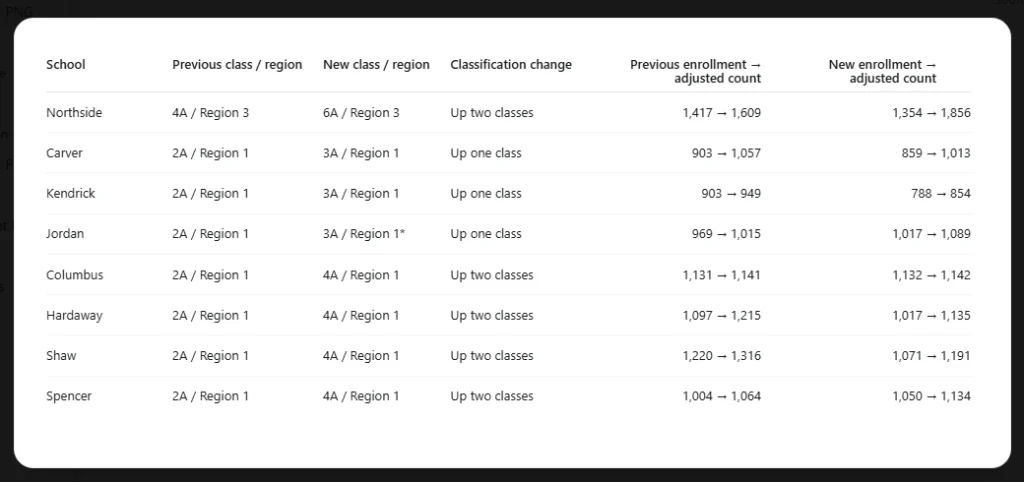
SOURCES: https://www.ghsa.net/constitution-section-2025-2026-appendix-r-classification-and-alignment and https://www.ghsa.net/constitution-section-2026-2027-appendix-r-classification-and-alignment
Northside’s assignment illustrates the difficulty of the transition. Its new region includes
Langston Hughes, which appeared in three of the five state championship games played from
2021 through 2025, winning in 2022. Creekside enters as the 2025 Class 4A state champion,
while private-school contender Woodward Academy reached the 6A championship game in
2023. Northside must navigate a region containing programs with recent experience competing
on the state’s biggest stage
The postseason selection process adds another variable. GHSA’s Post Season Rankings
formula now selects and seeds playoff teams across classifications, with region champions
receiving automatic berths. Carver’s difficult non-region schedule illustrates the challenge: the
Tigers faced 7A opponents Douglas County and South Gwinnett, 5A Southwest DeKalb and 4A
Douglass of Atlanta. A victory in any of those contests would have strengthened Carver’s playoff
case, but the Tigers were unable to secure a win in those four games. Their clearest opportunity
now comes through region play, which begins October 15 against Kendrick. Winning the region
would guarantee Carver a playoff berth despite those non-region losses. Meanwhile, Jordan’s
non-region schedule makes it ineligible, leaving seven district programs pursuing postseason
spots.
November will reveal whether Muscogee County can turn this difficult transition into a
postseason opportunity. Carver’s recent championships show what local players and coaches
are capable of, but moving up in classification does not create more talent, deeper rosters or
additional resources. If the district is left out of the playoffs, the final standings will tell only part
of the story. These teams are being asked to meet a higher competitive standard with the same
foundations—and the players carrying that challenge deserve their community’s support through
the final whistle.