A Thanksgiving tribute to the people who make it all possible
By Ricky Rogers | Press Box Perspectives | Georgia Alabama Sports Live
There’s something special about Thanksgiving in the South. Maybe it’s the unmistakable aroma of a turkey roasting in the oven, a beautifully glazed ham waiting to be carved, or the anticipation of gathering around a table overflowing with dishes that have been family traditions for generations. There’s cornbread dressing made from Grandma’s recipe, deviled eggs that mysteriously disappear before the blessing, sweet potato soufflé topped with toasted pecans, green bean casserole, and those warm, buttery yeast rolls that nobody can resist. And just when you think you couldn’t possibly eat another bite, somebody walks through the door carrying a homemade pecan pie and a pumpkin pie topped with whipped cream. Suddenly, you find a little more room.
But Thanksgiving has never really been about the food. It’s about the people gathered around the table, the memories shared between bites, the laughter echoing through the house, and the opportunity to slow down long enough to appreciate the blessings we sometimes take for granted. It’s also about recognizing that behind every wonderful holiday gathering are people who spent countless hours shopping, preparing, cooking, cleaning, and making sure everyone else had a place at the table. While the rest of us are enjoying that second helping of dressing, somebody is probably already in the kitchen washing dishes. Funny enough, high school athletics aren’t all that different.
Every week, thousands of fans across the Chattahoochee Valley fill stadiums and gymnasiums to cheer for their favorite teams. They see the touchdowns, the buzzer-beaters, the championship celebrations, and the unforgettable moments that become lifelong memories. What they rarely see, however, are the countless hours of preparation and the dedicated individuals who make those moments possible. Long before the first whistle blows, someone has unlocked the gates, prepared the playing surface, checked the equipment, arranged the seating, and made sure the facilities are ready. Someone has coordinated officials, organized transportation, handled paperwork, and worked through a seemingly endless list of details that most spectators will never consider.
When the final horn sounds, the crowd heads home, and the lights begin to fade, those same individuals are often the last ones to leave. They aren’t the ones being interviewed after the game. Their names rarely appear in the box score, and their pictures aren’t plastered across social media following a big victory. Yet without them, the games we love simply wouldn’t happen. This Thanksgiving, it’s time we gave those unsung heroes their flowers.
THE PEOPLE WHO MAKE IT POSSIBLE
At Brookstone School in Columbus, Athletic Director Jamie Williams understands that a successful athletic program depends on far more than the athletes and coaches whose names appear on the roster. Behind every game, every practice, and every championship pursuit is a group of dedicated individuals whose contributions often go unnoticed. When asked to identify some of the people who make a difference behind the scenes, Williams recognized three members of his athletic department whose commitment extends well beyond their official responsibilities.
First is Coach Phil Farmer, Brookstone’s Athletic Performance Coordinator and strength and conditioning coach. While many students are still hitting the snooze button, Farmer is already opening the weight room before school, providing opportunities for athletes and students alike to improve themselves. But Williams believes Farmer’s impact extends far beyond physical development. “Beyond the weightroom, he is a mentor to our athletes,” Williams explained. “His even keel demeanor and his wisdom goes a long way with our young people.” It’s a reminder that some of the most important lessons learned through athletics have nothing to do with winning games or lifting weights. Sometimes, the greatest contribution a coach can make is simply being a steady, positive influence in a young person’s life.
Then there’s Coach Jason Armstrong, an assistant football coach who also serves as Brookstone’s Middle School Athletic Director. If there’s a banner that needs hanging, a fence that needs repairing, a windscreen that needs replacing, or an athletic field that needs painting, there’s a good chance Armstrong has his hands in it. Williams described Armstrong as someone responsible for the setup and breakdown of nearly every athletic event, along with a seemingly endless list of facility maintenance responsibilities. “These tasks, along with many others, are necessary and usually never gets noticed when they are completed,” Williams said.
And isn’t that the truth? When the field looks perfect, the banners are hanging straight, and everything is ready for kickoff, nobody gives it a second thought. But let something go wrong, and suddenly everyone notices. That’s the reality for so many people working behind the scenes in high school athletics. Their greatest accomplishments are often the problems nobody ever knew existed.
And then there’s Lauren Pratt. As the administrative assistant to Brookstone’s athletic department, Pratt wears more hats than most people could possibly imagine. She’s an event planner, bookkeeper, content creator, and the person helping manage the online systems that keep the department organized. While coaches are preparing game plans and athletes are preparing for competition, Pratt is helping ensure the administrative side of athletics operates as it should. “What she does for athletics is crucial for the day-to-day operations and management of all of our teams,” Williams said.
Three individuals with three very different responsibilities, yet all share an unwavering commitment to making things better for the student-athletes they serve. Their contributions don’t come with cheering sections or postgame interviews, but they’re absolutely essential to the success of an athletic program. And while these examples come from Brookstone, the same story is being written at schools throughout Georgia and Alabama.
MORE THAN A GAME
Think about the athletic trainer who spends an entire Friday night on the sideline, ready to respond when an athlete goes down. The booster club volunteer who leaves work early to prepare the concession stand. The custodian who arrives before sunrise to make sure the gymnasium is ready for a tournament. Think about the public-address announcer who spends hours preparing rosters and pronunciations, the clock operator who quietly keeps the game moving, or the ticket taker who greets generations of families walking through the gates. Each plays a role in creating the atmosphere and experiences that make high school athletics such an important part of our communities.
Consider the school administrators who sacrifice evenings and weekends to supervise events, the bus drivers who safely transport teams across the region, and the countless parents who volunteer their time because they believe in something bigger than themselves. For many of these individuals, the work doesn’t end when the school day does. It stretches into late nights, early mornings, holidays, and weekends that could otherwise be spent at home with their families. Some receive a paycheck, many volunteer, and almost all contribute far more than their job descriptions require.
The beauty of high school athletics has always been its ability to bring communities together. Rivalries may divide us for a few hours on Friday night, but the shared commitment to providing opportunities for young people connects us in ways that extend far beyond the scoreboard. Those opportunities don’t happen by accident. They’re created by people who care enough to show up, roll up their sleeves, and do whatever needs to be done. While the athletes are the reason we gather, these individuals are a big part of the reason we’re able to gather in the first place. They are the hands behind the highlights, and this Thanksgiving, they deserve a seat at the head of the table.
FROM OUR FAMILY TO YOURS
As we reflect on the blessings of another year, those of us at Georgia Alabama Sports Live have plenty of reasons to be thankful. We’re thankful for the athletic directors and coaches throughout the Chattahoochee Valley who welcome us into their facilities, trust us to tell their stories, and allow us to showcase their programs. Their cooperation and support are essential to everything we do, and we never take that privilege for granted.
We’re thankful for the student-athletes who pour their hearts into their respective sports. The young men and women who practice when nobody is watching, compete with everything they have, and remind us why high school athletics are so special. Wins and losses may define a season on paper, but the determination, character, and perseverance displayed by these athletes are what make their stories worth telling.
We’re thankful for our viewers, who continue to tune in, share our broadcasts, engage with our content, and challenge us to deliver even more coverage of the teams and communities they love. Your passion fuels our passion, and your continued support inspires us to keep raising the bar. And, of course, we’re incredibly thankful for our generous sponsors and community partners. Their investments in Georgia Alabama Sports Live make it possible for us to bring local athletics into homes, businesses, and living rooms throughout the region. They understand that supporting high school sports means investing in young people, families, schools, and the future of our communities. Without their belief in what we’re building, much of what we do simply wouldn’t be possible.
ONE FINAL WORD OF THANKS
From the heart and keyboard of this thankful scribe, I want to take a moment to express just how grateful I am for each and every one of my Georgia Alabama Sports Live colleagues. To every producer, camera operator, member of our on-air talent, and the dedicated support staff working tirelessly behind the scenes, thank you. Thank you for the long nights, the early mornings, the miles traveled, the challenges overcome, and the countless hours spent making sure our broadcasts are something we can all be proud of.
And to our fearless leaders, Thrift Barringer and Tony Morgan, thank you for believing in a vision that continues to grow beyond what many of us could have imagined. This dream team never ceases to amaze me. Week in and week out, we’re finding new ways to elevate the product we deliver to our sponsors, our viewers, and the greatest group of student-athletes in the world — those who proudly call the Chattahoochee Valley home.
I’ve had the privilege of working alongside some incredibly talented people throughout my years, but there’s something different about this group. It’s the passion, the camaraderie, the willingness to do whatever it takes, and the shared belief that the stories unfolding on our local fields and courts deserve to be told. We don’t always get everything perfect. Sometimes the equipment doesn’t cooperate, the weather has other plans, or a broadcast throws us a curveball we never saw coming. But this crew keeps showing up, keeps finding solutions, and keeps pushing forward. And that’s something worth being thankful for.
So, as you gather around the Thanksgiving table this year, surrounded by family, friends, and enough Southern cooking to feed a small army, I hope you’ll take a moment to remember the people who make a difference in your life and community, especially the ones who rarely ask for recognition. Because whether it’s a holiday meal or a Friday night football game, the most important people aren’t always the ones sitting in the spotlight. Sometimes, they’re the ones making sure everyone else has a place at the table.
From my family to yours, Happy Thanksgiving. And to all those unsung heroes who make high school athletics possible across the Chattahoochee Valley, thank you. We see you. We appreciate you. And we’re thankful for you.
How Jordan High School’s Iron Maiden Tournament has become a proving ground for Georgia’s growing girls wrestling community.
Ricky Rogers
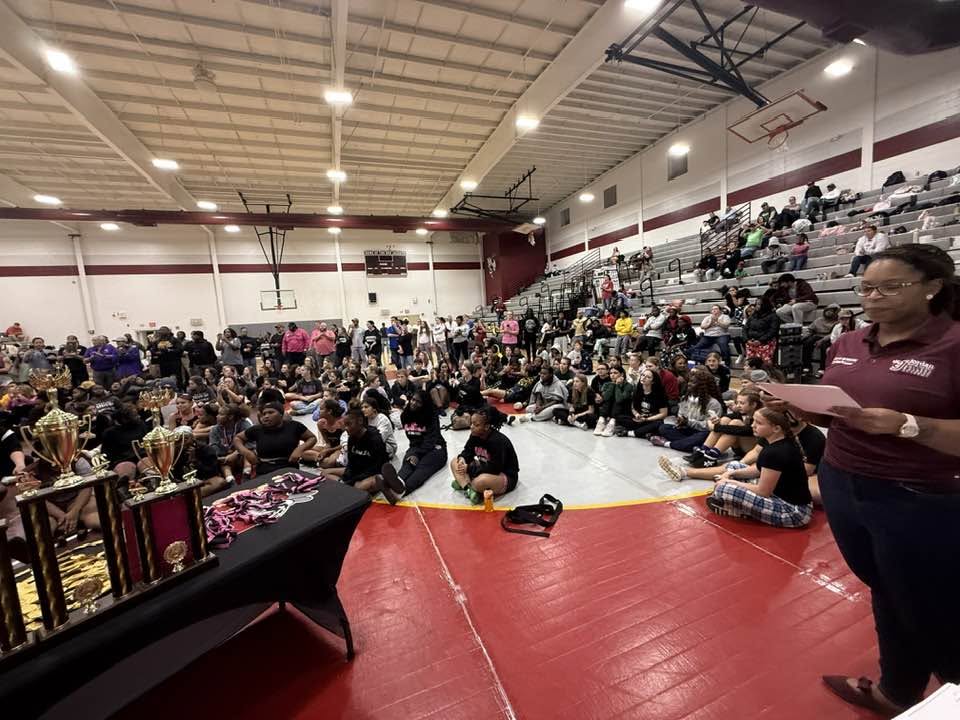
When wrestlers from across Georgia converge on Jordan High School this Saturday, November 14, they’ll be participating in more than another tournament on the high school wrestling calendar. They’ll be part of an event that has grown alongside the rapid development of girls wrestling, providing female athletes with a competitive stage to test their abilities against some of the state’s best.
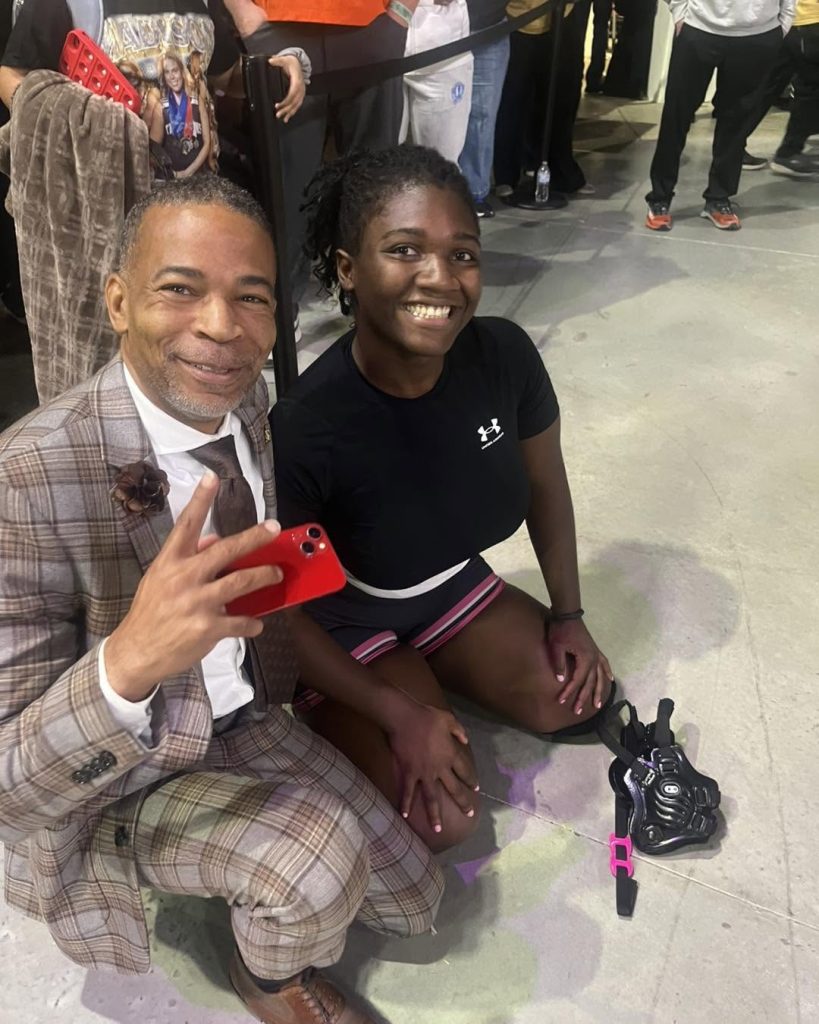
The Iron Maiden Girls Wrestling Tournament has become a fixture in Georgia’s expanding girls wrestling community, drawing competitors eager to measure themselves against established programs and potential state championship contenders. Behind the event is Jordan High School Athletic Director and Head Wrestling Coach Russell Scott, a man whose influence on the sport has earned statewide recognition and whose unmistakable sense of fashion has made him nearly as recognizable as the wrestlers he coaches.
For Scott, the tournament represents something considerably more meaningful than trophies, medals, and championship brackets. It’s about creating opportunities that weren’t always readily available to female athletes and demonstrating that girls wrestling has earned its place in Georgia high school sports.
FROM HUMBLE BEGINNINGS TO IRON MAIDEN
Girls wrestling in Georgia has undergone a significant transformation over the past decade. Female athletes were participating in wrestling before the Georgia High School Association officially recognized girls wrestling during the 2018–2019 school year, but opportunities for dedicated girls competitions were still developing.
Scott recalls GHSA beginning to explore expanded opportunities for female wrestlers around 2016, a period when the sport was gradually gaining traction across the state. Having previously coached girls in track and cross country and taught girls jiu-jitsu, Scott was already comfortable working with female athletes in competitive environments.
The idea for a tournament at Jordan High School came through then-Muscogee County Athletic Director Jeff Battles, who approached Scott about hosting an event specifically for girls. Scott agreed, and what began as a relatively small competition featuring local schools and a handful of programs from outside the area eventually developed into the Iron Maiden Tournament.
The inaugural Iron Maiden Girls Wrestling Tournament was held in 2019, with early competitions taking place on Friday evenings after school. What began as a modest gathering of local schools and a handful of programs from outside the area has since grown into an established event on Georgia’s girls wrestling calendar. According to Scott, participation has tripled since that first tournament, reflecting both the growth of the event and the increasing opportunities available to female wrestlers across the state.
As for the tournament’s memorable name, the inspiration came from an unlikely source: one of heavy metal’s most recognizable bands. Growing up in the 1980s, Scott was familiar with Iron Maiden and believed the name perfectly captured the identity he wanted for an all-girls wrestling tournament. His message was simple: tough girls with an iron will were here to stay.
It was a fitting name for a competition built around determination, toughness, and the willingness to compete in a demanding sport.
2023 Iron Maiden Tournament
A MEASURING STICK FOR THE STATE
What began as a relatively small event has experienced substantial growth. According to Scott, participation in the Iron Maiden Tournament has tripled since its earliest years, reflecting the increasing popularity of girls wrestling and the growing number of schools developing competitive programs.
The expansion, however, isn’t measured solely by the number of athletes entering the brackets. Scott believes the overall quality of competition has improved significantly as more girls gain experience, develop technical skills, and approach wrestling with increasingly competitive expectations.
“The sport is growing to the point of skill level is becoming more impressive,” Scott explained, noting that the Iron Maiden has developed into an important competitive benchmark. “Iron Maiden is used as a measuring stick because so many state contenders come here each year.”
That reputation gives the tournament significance beyond the individual matches. For established wrestlers, it offers an opportunity to compete against high-level opponents and evaluate their progress. For younger or less experienced athletes, it provides exposure to the level of competition they may eventually encounter while pursuing postseason success.
Scott also credits programs such as Carrollton, Greenbrier, and Woodward Academy among those that embraced opportunities for female wrestlers as the sport developed. Their willingness to build programs helped create the competitive foundation that tournaments like Iron Maiden continue to strengthen.
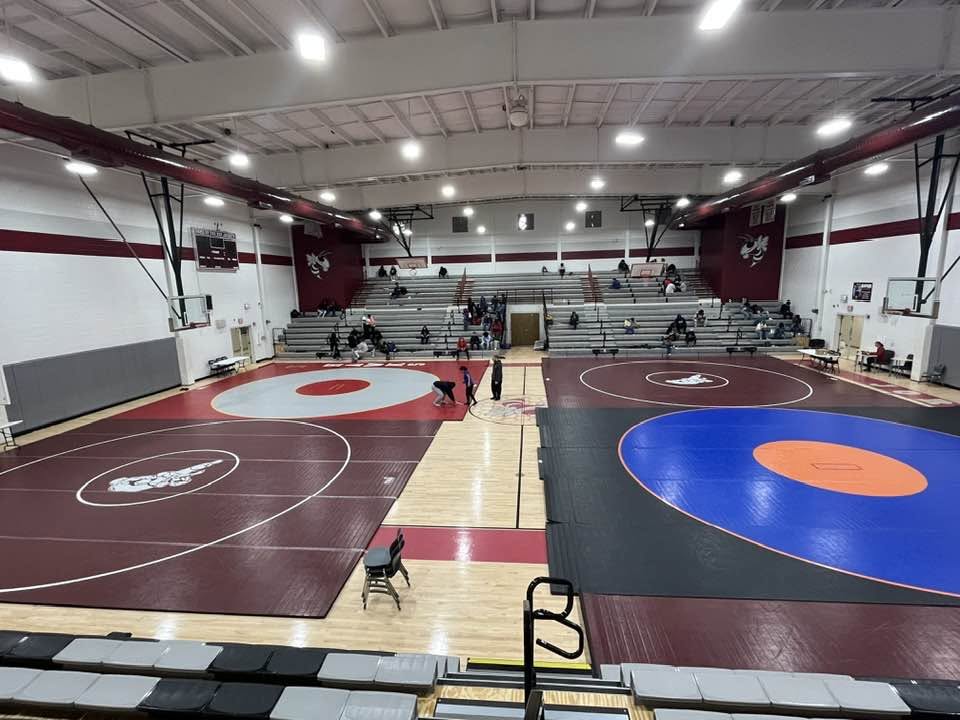
Jordan High School’s gymnasium will host the annual Iron Maiden Girls Wrestling Tournament this Saturday, 11/14/26.
A COACH WITH STYLE AND SUBSTANCE
Anyone familiar with Russell Scott knows he’s not particularly interested in blending into the background. Whether it’s a sharply tailored three-piece suit, a bold pink ensemble, or a velvet dinner jacket, the Jordan coach has developed a reputation among many as the best-dressed coach in Georgia. While other coaches might arrive at a wrestling tournament in a polo shirt and athletic shoes, Scott looks equally comfortable preparing for a championship match or attending a formal awards ceremony.
But behind the polished wardrobe is a coach whose dedication to Jordan High School spans nearly three decades. Having spent almost 30 years at the school, Scott has become a familiar figure in the Red Jackets’ athletic community, helping shape generations of student-athletes while building a legacy that extends beyond wins and losses. His longevity at Jordan provides a unique perspective on the evolution of high school athletics, particularly the emergence of girls wrestling as a recognized and increasingly competitive sport.
In 2024, Scott was named Georgia Girls Head Coach of the Year by the National Wrestling Coaches Association, an honor recognizing his accomplishments in coaching female wrestlers. His willingness to embrace girls wrestling came naturally from years of coaching female athletes in track and cross country, along with teaching girls jiu-jitsu. That experience helped position him among the early advocates for expanding competitive opportunities for female wrestlers in Georgia.
Among the athletes who have benefited from Scott’s guidance is Beatrice Suomie, who captured back-to-back Georgia state championships in the girls 190-pound weight class while representing Jordan High School. Her accomplishments provide a tangible example of the competitive success that has emerged from the Red Jackets’ girls wrestling program. For a coach who has spent nearly three decades at Jordan, developing athletes capable of competing at the highest level in Georgia is another reflection of the opportunities he has worked to create.
Scott says some of the most meaningful changes he has witnessed involve the personal growth of his athletes. As they improve their conditioning, develop their abilities, and begin recognizing their own progress, he has seen noticeable improvements in their attitudes and self-esteem. Those transformations represent an important part of his coaching philosophy, emphasizing the confidence, discipline, and perseverance that wrestling can develop.
For Scott, those lessons can be just as valuable as anything accomplished on the scoreboard.
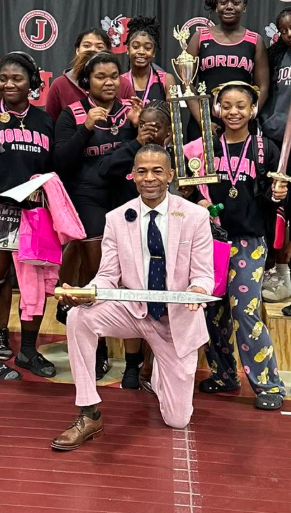
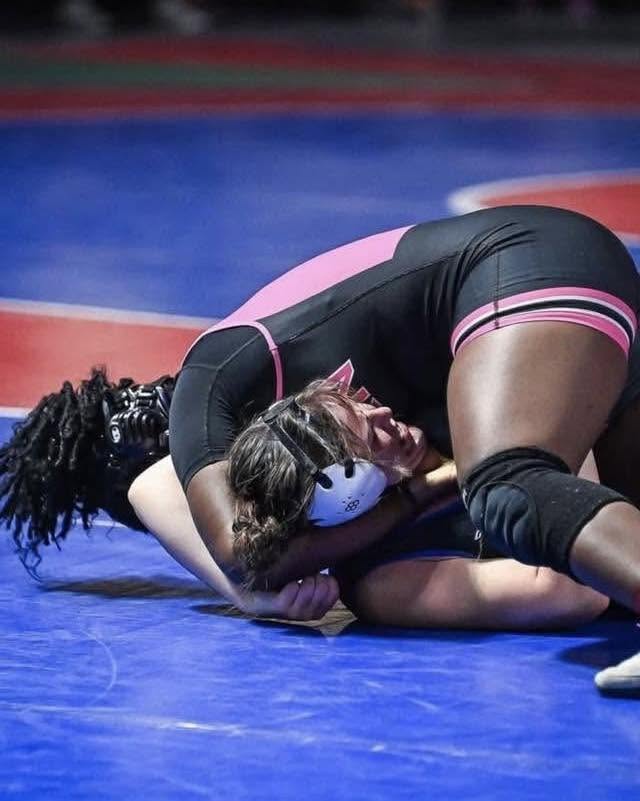
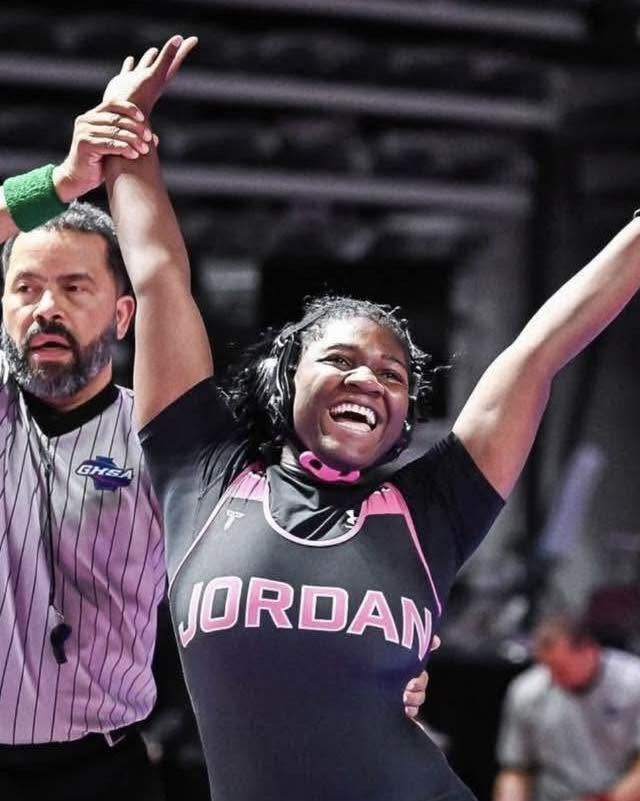
Coach Russell Scott and his Jordan Girls Wrestlers were the 2024 Iron Maiden ChampionsJordan Athletic Director and Wrestling Head Coach Russell Scott celebrates with 2026 190 class State Champion, Beatrice SuomieBeatrice Suomie of Jordan High School during her 2026 GHSA State Championship match.Beatrice Suomie of Jordan High School captured the GHSA State Championship in the 190 lb weight class in 2026.
THE NEXT GENERATION OF IRON MAIDENS
When competition begins Saturday, spectators can expect a full day of wrestling featuring athletes at different stages of their development. Scott believes one of the tournament’s defining characteristics is the camaraderie among the competitors, who share an appreciation for the challenges and demands of the sport despite representing different schools.
He hopes first-time participants leave understanding that wrestling offers valuable lessons regardless of their experience or skill level. Hard work and perseverance, he believes, are individual commitments that can benefit every athlete willing to embrace the challenge.
Looking ahead, Scott hopes the next decade brings continued growth and opportunities for girls at every competitive level. His vision isn’t limited to producing state champions or attracting larger tournament fields. It’s about ensuring that more young women have access to a sport capable of challenging them physically, strengthening their confidence, and teaching lessons that extend beyond athletics.
The Iron Maiden Tournament stands as evidence of how far girls wrestling has progressed in Georgia, but its continued growth also points toward opportunities still ahead. What began with a small collection of schools has developed into a competition where aspiring wrestlers can challenge themselves against some of the state’s strongest talent.
For Scott, the ultimate measure of success may not be found in the number of championship medals awarded Saturday, but in the number of young women who discover what they’re capable of accomplishing. For a tournament built around the idea of an iron will, that may be its most enduring legacy.
IRON MAIDEN GIRLS WRESTLING TOURNAMENT
Date: Saturday, November 14, 2026 | 8:00 am Location: Jordan High School — Columbus, Georgia Admission: Approximately $8–$10 Parking: Free Host: Jordan High School Wrestling Program
**Georgia Alabama Sports Live will broadcast the Iron Maiden Tournaments Semi-final and Finals on Saturday.**
The community partnerships helping GASL bring local athletics into the spotlight.
Ricky Rogers
On any given Friday night in the Chattahoochee Valley, the lights illuminate more than just a football field. They shine on young athletes chasing dreams, coaches building character, and communities coming together around something bigger than the final score. For Georgia Alabama Sports Live (GASL), capturing those moments has become a mission, providing a platform where the accomplishments of local student-athletes can be shared with audiences both near and far.
From football stadiums and basketball courts to baseball diamonds, softball fields, and beyond, GASL has established itself as a leading source for local high school sports coverage. While viewers see the action unfolding on their screens, there’s another team working behind the scenes to help make those broadcasts possible. It’s a team made up of businesses and organizations that have chosen to invest in the athletes, schools, and communities of the Chattahoochee Valley, demonstrating that their commitment extends well beyond traditional advertising.
MORE THAN A LOGO
For Garrett Payton, Sales Center Manager for Coca-Cola Bottling Company UNITED, supporting Georgia Alabama Sports Live is about something much deeper than brand recognition. It’s about being an active participant in the community and supporting the people who make it special.
“For me, this really comes down to being part of the community,” Payton explained. “We don’t just work here. We live here, raise our families here, shop here, go to church here, and sit in the stands on Friday nights right alongside everyone else.”
Coca-Cola UNITED is one of six presenting sponsors supporting GASL, joining Glynn Smith Chevrolet/GMC, Chick-fil-A, Jack Hughston Memorial Hospital, Attorney Mike Hostilo, and Hughston Sports Clinic. Although these organizations represent different industries, their involvement reflects a shared commitment to supporting local athletics and the communities they serve. Their partnerships help provide the resources necessary to deliver consistent coverage while giving student-athletes opportunities for recognition that might otherwise be unavailable.
For Payton, that recognition is particularly meaningful because of the dedication required of today’s student-athletes. “These young athletes work hard. They’re balancing school, practice, games, family responsibilities, and everything else that comes with growing up,” he said. “I think they deserve to have people in their community recognize that effort.”
Whether it’s a game-winning touchdown, a championship celebration, or a postgame interview with a student-athlete experiencing a moment they’ll never forget, GASL provides a platform for those accomplishments to be celebrated. Payton believes that recognition can have a lasting impact, particularly for young athletes who may not always realize how many people are following their achievements.
“What I really appreciate about GASL is that it gives our student-athletes a platform and shines a light on what they’re accomplishing,” Payton added. “Sometimes a little recognition can mean more to a young person than we realize.”
A COMMUNITY OF SUPPORT
Beyond its presenting sponsors, GASL receives support from a diverse collection of businesses and organizations throughout the region. Gordy Eye Care, Zaxby’s, Master Wall, Inc., Carol Perdue State Farm, the Columbus Lions, Frank’s Collision Center, Chattahoochee Valley Community College, NAI G2 Commercial Real Estate, Valley Hospitality—including Houlihan’s and City Mills Restaurants—PTAP, Terry Johnson Insurance Agency, Dave & Buster’s, and Slim Chickens are all part of the network helping make GASL’s coverage possible.
Together, these organizations represent a remarkable cross-section of the local business community. Healthcare providers, restaurants, insurance professionals, automotive businesses, educational institutions, and entertainment organizations may have little in common when it comes to their daily operations, but their involvement in GASL reflects a shared understanding of the importance of local athletics. Supporting high school sports isn’t necessarily about having a direct connection to the games themselves. It’s about recognizing the role those programs play in strengthening communities and creating opportunities for young people.
High school athletics have long served as a gathering place for families, neighbors, and generations of alumni. They create shared experiences, build school pride, and provide young people with lessons in teamwork, discipline, and perseverance. When businesses invest in organizations that help preserve and celebrate those experiences, their contributions reach beyond the playing field and into the communities they serve.
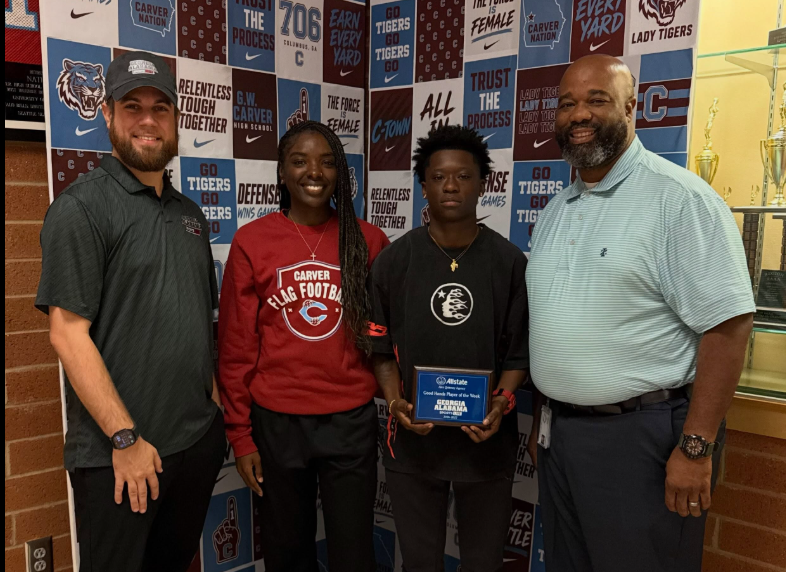
One example of how these partnerships directly celebrate student-athletes is the Alex Quinney Allstate Good Hands Player of the Game award. Sponsored by the Alex Quinney Allstate Agency, the recognition highlights outstanding individual performances during GASL broadcasts, giving deserving athletes an additional moment in the spotlight. It’s a fitting example of how a local business can connect its support of athletics with meaningful recognition for the young people competing on the field or court.
BUILDING SOMETHING BIGGER
When Thrift Barringer founded Georgia Alabama Sports Live in August 2023, his vision was to create a platform dedicated to local athletics and the student-athletes who participate in them. Since then, GASL has grown into a regional sports media operation producing more than 700 broadcasts annually, expanding its reach while continuing to focus on the schools and communities of the Chattahoochee Valley.
That growth requires considerably more than cameras, microphones, and talented broadcasters. Each production represents hours of preparation, travel, technical coordination, and teamwork. From the individuals calling the action to those operating cameras and managing the production behind the scenes, delivering consistent coverage requires both financial resources and a considerable commitment of time. Business partnerships play an important role in sustaining that effort and allowing GASL to continue building on Barringer’s original vision.
The impact of those partnerships extends well beyond the stadiums and gymnasiums where the games take place. For grandparents watching from another state, parents unable to attend because of work commitments, or former students following their alma mater, GASL provides a connection to the schools and athletes they care about. It also creates a lasting record of accomplishments, allowing student-athletes and their families to revisit memorable moments long after the final whistle.
AN INVESTMENT IN THE FUTURE
For Payton, the decision to support GASL reflects a broader belief that businesses have a responsibility to invest in the communities they call home. While sponsorships provide companies with opportunities to connect with local audiences, he believes their greatest value comes from supporting young people and the organizations working to recognize their achievements.
“When you invest in local high school athletics, you invest in much more than sports,” Payton said. “You’re investing in young people, families, schools, and the future of your community.”
As Georgia Alabama Sports Live continues to grow, the relationships it has established with local businesses will remain an important part of its ability to serve the region. Those partnerships represent more than financial transactions or advertising opportunities. They reflect a collective belief that the accomplishments of local student-athletes deserve attention and that the stories unfolding on fields and courts throughout the Chattahoochee Valley are worth telling.
The athletes may be the ones making the plays, breaking records, and celebrating championships, but the businesses supporting GASL are helping ensure those moments reach a much larger audience. Their investment demonstrates how the business community can play a meaningful role in preserving the traditions, celebrating the achievements, and supporting the future of local high school athletics.
As Payton put it, “When the business community supports our young people, everybody wins.”
Press Box Perspectives is a recurring feature of Georgia Alabama Sports Live, exploring the people, stories, and issues shaping athletics throughout the Chattahoochee Valley.
The remarkable story of Thrift Barringer, whose relentless work ethic and unwavering belief turned a cell phone and a dream into a growing sports media network.
There was a time when Thrift Barringer thought he was having lunch with a rock star.
He was just a boy, sitting across the table from his grandfather, Coach Larry Bush, when someone would inevitably interrupt their meal.
Sometimes it was a handshake. Sometimes a hug. Often, it was a few words of gratitude from a former player who hadn’t worn a uniform in years.
It happened often enough that young Thrift began to understand something about the man sitting across from him.
People knew his grandfather.
More importantly, they remembered him.
Not simply because he had coached them. Not because of a particular victory or a championship season. They remembered him because, somewhere along the way, Coach Bush had made a difference in their lives.
And they wanted him to know it.
“I remember sitting there thinking I was having lunch with a rock star,” Barringer recalled. “And in my eyes, I was.”
At that age, Thrift couldn’t have understood everything those encounters represented.
He couldn’t have known that years later, he would build a career around celebrating young athletes, recognizing overlooked accomplishments, and creating opportunities for people whose stories might otherwise go untold.
He certainly couldn’t have imagined that a cell phone, a cheap tripod, and two $40 microphones would eventually become the foundation of a sports media organization reaching millions of viewers.
But perhaps the most important part of his future was already taking shape.
Because long before Thrift Barringer understood what he wanted to do with his life, his grandfather was teaching him what kind of life was worth living.
And nearly everything Barringer has built since can be traced, in one way or another, to the people who helped shape the man behind the dream.
THE MAN BEHIND THE NOISE
My first encounter with Thrift Barringer wasn’t particularly profound.
I was working as the public address announcer for Northside High School baseball when Barringer arrived to stream a game. We met briefly in passing, exchanging little more than the usual introductions.
But I remember my first impression vividly.
Damn, this guy is loud.
As it turns out, I wasn’t wrong.
Having gotten to know Barringer considerably better since that afternoon, I can confidently report that he hasn’t gotten any quieter. He’s still wildly spontaneous, endlessly energetic, and seemingly capable of having three conversations while simultaneously dreaming up his next big idea.
But something about my impression of him has changed.
I’ve discovered that beneath all that noise, the restless energy, and the seemingly endless stream of ideas is a man with an extraordinarily big heart.
And the more I’ve gotten to know Thrift Barringer, the more I’ve come to understand that his greatest quality isn’t necessarily his ability to make himself heard.
It’s his ability to make other people feel like they matter.
Spend enough time around him and you’ll quickly discover that Thrift doesn’t do much of anything halfway.
He talks fast. He thinks faster. And when an idea captures his imagination, there’s a good chance he’s already figuring out how to make it happen before everyone else has finished processing what he just said.
But there’s another side to that enthusiasm.
When Barringer talks about the athletes his organization covers, the people who work alongside him, or the individuals who helped him get started, the conversation becomes something more than business.
It becomes personal.
And to understand why, you have to go back to the beginning.
A DREAM THAT REFUSED TO WAIT
In 2023, Barringer was living two professional lives.
He worked full-time as a teacher while pursuing broadcasting opportunities through SportsVisions, where he learned under the mentorship of DJ Jones.
Those opportunities occasionally took him into some of college football’s most recognizable environments, including SEC giants Georgia, Auburn, and Alabama.
He loved broadcasting.
He wanted to make it his career.
But wanting something and finding someone willing to give you the opportunity are two very different things.
For Barringer, the waiting eventually became more frustrating than the uncertainty of doing something himself. Rather than continue hoping someone would open a door, he decided to create one.
There was no elaborate business plan or major financial investment.He had a phone, a cheap tripod, and two microphones that cost about $40 each.
So he started showing up at high school games and streaming them to his personal Facebook page.
The production was simple. The ambition behind it wasn’t.
Barringer had played basketball at Glenwood School, and he understood what it meant to compete without receiving widespread recognition.
He knew the feeling of being a young athlete who wanted someone to notice.
Now he was in a position to give other athletes something he had once wanted for himself.
Initially, he viewed the broadcasts as a way to gain experience and create opportunities in sports media.
But as families began watching and schools began embracing the coverage, his perspective changed.
What started as an effort to advance his own career was becoming an opportunity to serve an entire community.
In August 2023, Georgia Alabama Sports Live was born.
At the time, Barringer couldn’t have imagined how quickly the organization would grow.
He only knew that he believed in what he was doing.
And he wasn’t the only one.
THE PEOPLE WHO SHOWED UP FIRST
Success stories often become polished with time.
The uncertainty fades from memory. The difficult decisions become defining moments. The people who once wondered whether an idea would work begin talking about how obvious its potential had been all along.
But building something from nothing rarely feels inevitable when you’re the person doing it.
Barringer’s early days were filled with the ordinary difficulties of entrepreneurship.
There were games to cover, equipment to manage, relationships to build, and responsibilities that seemed to multiply with every new opportunity.
There were also people who believed in him before there was much evidence that his idea would become a successful business.
Among them were Toygar Ayla, Chris Gates, and Richard Holdridge.
They gave their time and energy to help establish GASL, often working long hours, after their full time jobs without compensation.
Their contributions weren’t glamorous.
They were foundational.
And Barringer has never forgotten them.
That willingness to remember the people who believed first is one of the qualities Tony Morgan admires most about his business partner.
“What people don’t see is how loyal he is,” Morgan explained. “Thrift remembers who believed in him early, and he protects those relationships even when it would be easier not to.”
Morgan says that loyalty influences the way Barringer approaches business relationships, partnerships, and decisions affecting the schools his organization serves.
For Barringer, relationships aren’t simply a means of achieving something.
They are part of what makes the achievement worthwhile.
“That is not a policy he wrote down one day,” Morgan said. “It is just who he is.”
In an industry where growth can sometimes make yesterday’s relationships feel less important than tomorrow’s opportunities, Barringer has worked to maintain a connection to the people who helped him begin.
And among those early believers was a woman whose influence would help change the course of his life.
THE WOMAN WHO TAUGHT HIM TO BET ON HIMSELF
Natalie Vega saw something in Thrift Barringer that he wasn’t yet entirely convinced he could become.
An entrepreneur herself, Vega recognized the potential in the broadcasts he was producing and encouraged him to approach the operation as something more than a hobby.
She understood that enthusiasm could start a business.
But belief, discipline, and commitment would be necessary to sustain one.
Her encouragement wasn’t limited to conversations about entrepreneurship.
She showed up at games.
She helped him with the phone he was using to stream.
She witnessed firsthand the modest beginnings of what would eventually become GASL.
And when Barringer began considering whether he could leave teaching to pursue the organization full-time, Vega was among those encouraging him to take the risk.
“She showed me what it looked like to bet on yourself,” Barringer said.
One came with a predictable paycheck.The other came with uncertainty, responsibility, and no guarantee that the audience he was building would continue to grow.
But after GASL’s first successful year, Barringer made the leap.
He left his full-time teaching position and committed himself to the business.
He describes the decision as an act of faith.
And faith, he says, has remained central to the journey.
Barringer believes God directed him toward a purpose he hadn’t originally envisioned.
He had dreamed of becoming a broadcaster.
He hadn’t necessarily dreamed of creating an organization that would provide opportunities for dozens of other broadcasters while celebrating thousands of young athletes.
Sometimes, he discovered, the dream you begin pursuing isn’t the same one you’re ultimately meant to fulfill.
And sometimes, it takes someone else’s belief to give you the courage to find out.
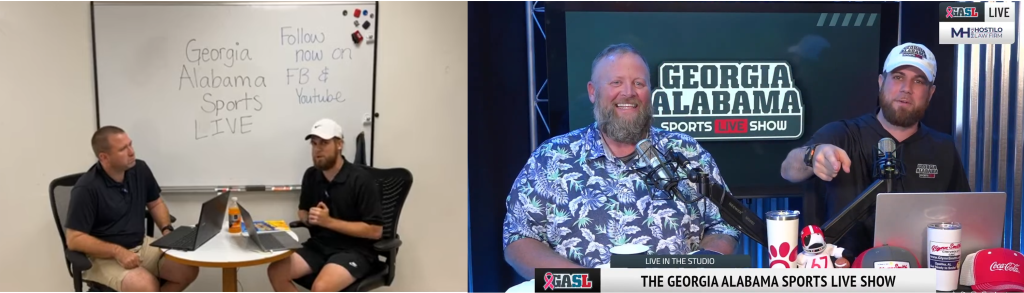
(L) Thrift Barringer and Richard Holdridge hosting the very first episode of the Georgia Alabama Sports Live Show on August 11, 2023. (R) Thrift Barringer and Mike Frost hosting a recent episode of the show from the CNAW Studios.
LEARNING TO LEAD WHAT HE BUILT
The next challenge came from an unexpected direction.
GASL was growing.
Fast.
Schools wanted more coverage. Audiences were increasing. The broadcast schedule was expanding.
What had begun as a small operation was becoming something far more complicated.
Barringer found himself trying to manage nearly every aspect of the organization.
He was a broadcaster, salesperson, scheduler, producer, and problem-solver.
And the very qualities that had helped him launch the business—his energy, determination, and willingness to do whatever was necessary—were no longer enough to manage everything it was becoming.
He needed help.
More importantly, he needed to learn how to accept it.
That evolution accelerated when Tony Morgan entered his life.
Morgan had built and sold businesses of his own. After selling his companies in 2018, he believed his days of building organizations were behind him.
Then he met Barringer.
The two crossed paths while Thrift was covering GIAA schools, and Morgan began taking an interest in the young entrepreneur’s vision.
He saw more than a promising business opportunity.
He saw a man who genuinely cared about the communities he served.
Families could watch their children compete without paying for access. Schools were developing relationships with a media organization that wanted to celebrate their programs.
And the founder was personally invested in making it work.
“We went from one man streaming games to a full production team with real partners behind it,” Morgan said, “and Thrift still sets the tone for all of it.”
Morgan began offering advice.
Over time, that relationship developed into a business partnership and helped establish Varsity Sports Network, the parent company behind GASL and its expanding operations.
For Barringer, however, Morgan’s significance extends beyond business.He describes him as a mentor and almost an uncle figure.
Someone who challenged him to think differently.
Someone who helped him recognize that being an entrepreneur and becoming an effective CEO require different skills.
Barringer had already proven he could build something.
Morgan helped him understand how to lead it.
“He’s become almost like an uncle figure, a mentor, and somebody I didn’t even realize how badly I needed in my life,” Barringer said.
The relationship is rooted in mutual respect.
Morgan recognizes the qualities that make Barringer uniquely suited to the organization’s mission.
And he sees his own responsibility as helping create the structure that allows those qualities to flourish.
“Thrift is the reason it works,” Morgan said. “My job is to make sure he has what he needs to keep doing it.”
For Barringer, the lesson was profound.
He didn’t have to stop being the dreamer.
He simply had to learn that the biggest dreams are rarely accomplished alone.
THE PEOPLE BEHIND THE PICTURE
Today, Georgia Alabama Sports Live bears little resemblance to the operation Barringer launched in 2023.
More than 30 people now contribute to the organization, which partners with 17 schools and produces more than 700 live broadcasts annually.
Its coverage extends well beyond football and basketball.
Baseball, softball, volleyball, flag football,wrestling and other sports have become important parts of the programming schedule.
The result is a platform that celebrates athletes who might otherwise receive limited exposure.
Mike Frost, who has worked alongside Barringer in the broadcast booth since the 2025 football season, has a memorable way of describing his colleague’s motivation.
“He’s like Wu-Tang, he’s for the kids.”
It’s an unconventional comparison.
It’s also difficult to argue with.
Frost has watched Barringer’s enthusiasm for young athletes firsthand, particularly when it comes to programs that don’t always receive the attention given to more prominent sports.
He has also witnessed something that illustrates the organization’s impact.
At games, Frost has noticed students sitting in the stands while watching GASL’s broadcast on their phones.
They’re already at the event.
They can see the action happening in front of them.
But they’re listening to hear the announcers recognize their friends, teammates, and family members.
For those students, the broadcast has become part of the experience.
And for the athletes being recognized, it can make an ordinary moment feel extraordinary.
Mike Peacock, another GASL play-by-play broadcaster, believes Barringer’s passion for sports and his affection for the Chattahoochee Valley are inseparable.
“Thrift loves sports and that is first and foremost,” Peacock said.
But Peacock also recognizes the work required to deliver the organization’s productions.
Behind every broadcast is a group of people coordinating equipment, preparing information, managing technical details, and working to give viewers a professional experience.
Matt Melton, who joined the broadcast team at the beginning of the 2025–26 school year, was struck by that organization.
For all the spontaneity of the man who founded GASL, the productions themselves require preparation and coordination.
Melton understands that broadcasters have a responsibility to know the teams they’re covering.
That means studying rosters, learning about coaches, researching statistics, and identifying the stories that make each game meaningful.
But he also sees something beyond the immediate broadcast.
When Melton was growing up, high school games weren’t routinely available for families to watch from home.
Today, athletes can revisit performances long after their playing days are over.
A memorable touchdown.
A game-winning hit.
A championship celebration.
A senior’s final appearance in a school uniform.
These are moments that families may treasure for decades.
GASL is helping preserve them.
For Frost, the experience has also created something unexpected.
Friendship.
He describes the organization as another family, a place where relationships have developed alongside the work.
It’s a sentiment that speaks to the culture Barringer has helped establish.
The company produces sports broadcasts.
But the people producing them have become part of one another’s lives.
And Morgan believes that sense of connection begins with the founder.
“He also has a teacher’s heart,” Morgan said.
Barringer approaches an ordinary weeknight game with the same enthusiasm he brings to a championship event.
He cares about the athletes whose names may never appear in major recruiting rankings.
He understands that a small moment of recognition can become a lasting memory.
And although he left the classroom to pursue broadcasting, the desire to make a difference in young people’s lives has never left him.
A VALLEY WORTH BELIEVING IN
The growth of GASL has been remarkable.
During the 2025–26 school year, the organization generated 12,682,740 views across its digital platforms.
That represented a 170 percent increase over the previous year.
Audience interactions climbed to 158,620, an increase of 323 percent.
More than 10,700 new followers joined its platforms, while viewers accumulated over 87,000 hours of YouTube watch time.
Those numbers demonstrate the extraordinary appetite for local sports coverage.
But Barringer sees something more meaningful behind them.
He sees families.
Communities.
Schools.
And a region he believes deserves greater recognition.
The Chattahoochee Valley stretches across state lines, bringing together communities in Georgia and Alabama.
Its schools compete fiercely against one another.Its rivalries are deeply rooted. And its athletes wear different colors on Friday nights.
But Barringer believes those differences are part of a larger shared identity.
He wants the region to take pride in its accomplishments.
He wants young athletes to recognize that their communities are worth representing.
And he wants the stories being told through GASL to challenge the idea that meaningful athletic achievement happens only in larger markets.
His philosophy can be summarized in a phrase that has become something of a rallying cry.
“It’s the Chattahoochee Valley versus everybody.”
That pride has helped drive the organization’s expansion.
In fall 2026, Middle Georgia Sports Live launched as the first new market under Varsity Sports Network.
The operation has established partnerships with 11 schools and assembled a team of approximately 15 to 20 people.
For Morgan, the expansion represents an opportunity to build upon the approach that made GASL successful.
The goal isn’t simply to make the company bigger.
It’s to bring the same community-centered coverage to additional schools and families.
And Barringer continues looking ahead.
There are more opportunities to pursue, more stories to tell, and more young people who deserve to be recognized.
But ask him what makes him proudest, and he doesn’t begin with the audience numbers.
He begins with the people.
The team members who believed in his vision.
The broadcasters who bring passion to their assignments.
The individuals who work behind the scenes, often without public recognition.
The people who have taken something that began as one man’s dream and made it their own.
For Barringer, their dedication represents something no financial statement can adequately measure.
And it reinforces a lesson that has followed him throughout his life.
The most meaningful accomplishments are rarely individual ones.
THE WORK ETHIC OF A FATHER
If Coach Larry Bush gave Barringer his love of sports, his father gave him something equally important.
The determination to work.
Glenn Barringer has long represented an example of relentless effort to his son.
Thrift describes him as one of the hardest-working people he has ever known.
His father taught him that success doesn’t always belong to the most naturally gifted person.
It often belongs to the person willing to put in the work when others won’t.
That philosophy became especially important during GASL’s earliest days.
There were no guarantees. No established formula. No certainty that the business would survive. But Barringer understood the value of showing up, doing the work, and refusing to quit simply because something was difficult.
Those lessons remain part of the organization’s identity.
And when Barringer reflects on the people responsible for shaping him, he sees how their influence has combined.
His father taught him to work.
Natalie Vega taught him to believe in himself.
Tony Morgan taught him to lead.
His early colleagues taught him the power of shared commitment.
And his grandfather taught him something that gave meaning to all the rest.
THE MEASURE OF A MAN
Coach Larry Bush spent decades influencing young athletes throughout the Chattahoochee Valley.
His coaching career included time at Rothschild Middle School and Jordan High School, and his impact extended far beyond the teams he led.
Barringer remembers the championships and the accomplishments. He remembers the lessons. But most of all, he remembers the people.
The former players who approached his grandfather years after their playing days had ended.
The men who still wanted to shake his hand.
The people who had become adults, built careers, raised families, and continued carrying something their old coach had given them.
To young Thrift, those encounters were proof that his grandfather was important.
Today, he understands that they represented something much greater.
They were evidence of a life spent investing in others.
“My love for sports comes from my granddad,” Barringer said.
And so much of the person he has become, he believes, can be traced to the example Coach Bush set.
Barringer is proud of the organization he has built.
He is grateful for its growth and excited about its future.
But he doesn’t speak about his grandfather as someone whose accomplishments he hopes to surpass.
He speaks about him as someone whose example he hopes to honor.
“I don’t care how successful Georgia Alabama Sports Live becomes, how many people know my name, or how big this company grows,” Barringer said. “I’ll never be as big of a deal as my granddad is in my eyes.”
Consider that statement for a moment.
Here is a man who has built a growing sports media organization from almost nothing.
A man whose company reaches millions of viewers.
A man whose work gives countless young athletes an opportunity to be recognized.
And when he considers what it means to be truly successful, his thoughts return to a childhood lunch table.
Not to a boardroom.
Not to an audience report.
Not to a broadcast booth.
To a table where a boy watched strangers approach his grandfather simply to say thank you.
WHAT REMAINS AFTER THE GAME
There is a temptation to measure Thrift Barringer’s story by how far Georgia Alabama Sports Live has come.
The humble beginnings make for an appealing narrative.
One man. One phone. A cheap tripod. Two microphones. Millions of viewers.
It’s the kind of progression that makes people believe almost anything is possible.
And in many ways, that’s exactly what Barringer hopes his story demonstrates.
But reducing his journey to a story about entrepreneurial success would overlook the very thing that makes it meaningful.
Thrift Barringer didn’t build GASL by himself.
He knows that.
And he wants other people to know it, too.
He remembers DJ Jones, who helped him develop as a broadcaster.
He remembers Toygar Ayla, Chris Gates, and Richard Holdridge, who gave their time when the organization was still finding its footing.
He remembers Natalie Vega, who believed his dream was worth pursuing before he was certain he could pursue it.
He values Tony Morgan, who helped him become the leader his growing organization needed.
He carries the work ethic his father instilled in him.
And he continues to look up to the grandfather who taught him that the greatest accomplishments are measured in the lives we touch.
Those relationships aren’t footnotes to his success. They are the story.
And perhaps the most meaningful thing Barringer has accomplished is finding a way to pass along what those people gave him.
A young athlete receives recognition.
A broadcaster gets an opportunity.
A family watches a loved one compete.
A community celebrates a moment that might otherwise have gone unnoticed.
And somewhere, without necessarily realizing it, Barringer may be making the kind of difference that once inspired him as a child.
I think back to my first impression of Thrift.
Damn, this guy is loud.
I still believe that.
But I’ve come to understand something else.
Sometimes the people who make the most noise are also the ones who care most deeply about making sure others are heard.
And beneath the constant motion, the big ideas, and the enthusiasm that rarely seems to have an off switch, I’ve discovered a man whose heart is every bit as big as his dreams.
There may come a day when the name Thrift Barringer is known far beyond the Chattahoochee Valley.
There may be more markets, more broadcasts, more schools, and more remarkable numbers.
But I suspect the achievement that would mean the most to him won’t appear on an annual report.
It will happen years from now, when a former athlete, broadcaster, or colleague sees him somewhere and takes a moment to say thank you.
Not for a particular game.
Not for a championship broadcast.
But for believing in them.
For giving them an opportunity.
For making them feel like they mattered.
And if that day comes, Barringer will have accomplished something far greater than building a successful company.
He will have continued a legacy.
Because once upon a time, there was a little boy sitting across from his grandfather, watching grown men approach their table to express their gratitude.
He thought he was having lunch with a rock star.
He didn’t yet understand that the real measure of the man wasn’t how many people knew his name.
It was how many people remembered the difference he made.
Today, Thrift Barringer is building something that gives others a chance to be seen, celebrated, and remembered.
And maybe, just maybe, somewhere down the road, a young person will look at him with the same admiration he once reserved for his grandfather.
If that happens, I suspect Thrift will understand exactly what it means.
Because no matter how big his company grows, how far his influence reaches, or how many people come to know his name, there will always be one man he considers larger than life.
Coach Larry Bush.
“He’ll always be my hero.”
Press Box Perspectives is a weekly feature of Georgia Alabama Sports Live, exploring the people, stories, and issues that shape athletics throughout the Chattahoochee Valley.
This Halloween, the most intriguing young monsters can be found on the football field. At Central, Glenwood, Russell County, and Carver, varsity contributors are giving opponents something to think about—and they’re only getting started.
Halloween is the season for a good scare.
For a football defense, 1,000 receiving yards attached to a sophomore’s name ought to do it.
For an offense, a freshman with 53 tackles, eight tackles for loss, and a defensive touchdown offers its own unsettling possibilities.
The numbers are real. So is the youth behind them.
Haunting Defensive Coordinators in the 6A classification of the AHSAA, sophomore Braylen Averett is putting together a receiving résumé that already demands attention. At Glenwood, sophomore Kason Peterson is building on varsity experience that began during his freshman year. At Russell County, freshman Zachery Berklin has made his presence felt in the tackle column, behind the line of scrimmage, and in the end zone. At Carver, young linebacker Braylon Toney has head coach Jarvis Jones excited about a player whose best football, he believes, still lies ahead.
They arrive at this Halloween-themed gathering with different credentials. Averett has substantial production across two varsity seasons. Peterson’s supplied sophomore report offers an encouraging two-game glimpse. Berklin has a freshman defensive record that reaches across several categories. Toney’s story comes into focus through his coach’s assessment of his ability and development.
There are no crystal balls here. A promising start doesn’t tell us exactly how a career will unfold.
But it does give us a reason to watch.
And when young players are already contributing against varsity competition, imagining what another season or two might bring becomes part of the fun.
For their own fans, that’s an exciting thought.
For future opponents, it might be the scariest part. Something
Braylen Averett: A Sophomore-Sized Nightmare
If you’re assembling a Halloween watch list, start with a Central Red Devils receiver who has already reached four figures—and isn’t showing any signs of slowing down.
Sophomore Braylen Averett has become one of Alabama’s most dangerous offensive weapons, hauling in 42 receptions for 1,000 yards and 11 touchdowns through nine games. He’s averaging an eye-popping 23.8 yards per catch, and according to Central head coach Cody Flournoy, his receiving yardage leads all of Alabama’s Class 6A.
Those numbers would be impressive for a senior. For a sophomore? They’re downright frightening.
And the scariest part for opposing defenses might be that Averett is only getting started.
Averett’s explosive production has helped Central capture a region championship with a perfect 7-0 record in region play. The Red Devils are preparing for their regular-season finale against Clay-Chalkville before turning their attention to the postseason.
But Averett’s emergence didn’t happen overnight.
As a freshman, he led Central with 49 receptions, accumulating 939 yards and nine touchdowns. His efforts earned him Freshman All-American recognition from MaxPreps, and he played a significant role on a Red Devils squad that finished 11-2, falling just one point short of reaching the state championship game.
Now, a year older, bigger, and stronger, Averett has taken his game to another level.
“From his 9th to 10th grade seasons he has grown taller, and gotten bigger in general,” Flournoy explained.
That physical development, combined with exceptional athletic ability, has transformed Averett into a matchup nightmare.
“He has big play ability as a catch and run slot receiver, he has unbelievable quickness and top end speed that make him a nationally ranked type player,” Flournoy said.
And Averett isn’t simply outrunning defenders. He’s also going over them.
Flournoy points to his receiver’s ability to make spectacular catches over defenders, adding another dimension to an already dangerous offensive arsenal. Earlier this season, Averett received a four-star prospect rating from MaxPreps.
The sophomore patterns his game after Malachi Toney, and Flournoy sees similarities between the two.
But perhaps the most impressive part of Averett’s story has nothing to do with what happens between the sidelines.
An honor student whose parents both serve as administrators in the school system, Averett has already established himself as a leader within the Central program.
“Even being a Sophomore, he is a team leader both vocally and in his work-ethic,” Flournoy said.
For a player receiving national attention at such a young age, that maturity may prove just as valuable as his speed and athleticism.
Flournoy describes Averett as someone who takes his training seriously and continues developing not only as a football player but also as a young man.
And the statistics suggest that dedication is paying off.
Through 22 varsity appearances across his freshman and sophomore seasons, Averett has accumulated 91 receptions, 1,939 receiving yards, and 20 touchdowns. His sophomore receiving average has climbed from 19.2 yards per catch as a freshman to 23.8, while his receiving yardage per game has jumped from 72.2 to 111.1.
He’s producing more yards and touchdowns in fewer games.
For Central fans, those numbers offer plenty of reasons to be excited about the future.
For opposing defensive coordinators, they present an entirely different emotion.
Because when a sophomore is already producing like one of the state’s premier receivers, displaying leadership beyond his years, and continuing to grow physically and mentally, there’s one unsettling question left to consider.
Just how scary could Braylen Averett become?
Kason Peterson: Something is stirring at Glenwood
Every Halloween story doesn’t reveal everything in the opening scene.
At Glenwood, Kason Peterson’s varsity record offers an early look at a player whose next stretch deserves attention.
The sophomore’s supplied report covers two games: three receptions, 52 receiving yards, and one touchdown. He’s averaging 17.3 yards per catch and 26.0 receiving yards per game.
That’s a small sample, and it needs to remain one in the telling. Two appearances can’t establish how an entire season will unfold.
They can, however, show a young player continuing to contribute after getting his first varsity experience a year earlier.
As a freshman, Peterson appeared in seven varsity games, catching four passes for 67 yards and a touchdown. His average reception gained 16.8 yards.
Through the two sophomore appearances listed, he’s already within one catch and 15 receiving yards of those freshman totals. He has also matched his previous season’s receiving touchdown total.
There’s an encouraging thread connecting the two reports. His average yards per catch have remained similar, moving from 16.8 to 17.3, while his average receiving yardage per game has increased from 9.6 to 26.0.
On Glenwood’s supplied leaderboard, that 26.0-yard figure places him second in receiving yards per game. His touchdown puts him alongside Drew Wood with one receiving score.
Those details give Peterson’s contribution a place within the Gators’ offense. They show why his name belongs in the conversation without asking a two-game report to carry more weight than it should.
Across his nine listed varsity appearances over two seasons, he has seven catches for 119 yards and two touchdowns—an average of 17 yards per reception.
That’s a foundation built from early opportunities: varsity experience as a freshman, another productive opening sample as a sophomore, and a touchdown in each season.
What happens as the sample grows will make the story more complete.
More games can show whether the early sophomore pace holds or changes, and how Peterson’s contribution develops within Glenwood’s offense.
For now, he brings a different kind of intrigue to this collection of young talent. Averett’s numbers make an immediate entrance. Peterson’s report asks readers to stay for the next chapter.
Something is stirring at Glenwood.
The next set of opportunities will help show its shape.
Zachery Berklin: A freshman haunting the stat sheet
Zachery Berklin’s defensive report gives Russell County fans several places to look.
There are the tackles: 53 across 10 games, including 19 solo stops and 34 assists.
There are the plays for lost ground: eight tackles for loss and two sacks.
There’s a pass defended and a fumble recovery.
And then there’s the entry with the most Halloween-feature appeal: a fumble returned 38 yards for a touchdown.
For a freshman, that’s quite a collection.
The touchdown is easy to spot. It turns a defensive opportunity into points and gives Berklin a scoring play to go alongside his other contributions.
We don’t need to invent the scene around it. The supplied report gives us the essential detail: 38 yards, touchdown.
The broader picture becomes more interesting when that play is considered alongside the rest of his numbers.
His 53 tackles average out to 5.3 per appearance over the 10 games listed. His eight tackles for loss record contributions that ended with the offense moving backward. The sacks add another form of disruption.
Those categories can overlap, so they shouldn’t be added together as though each represents an entirely separate play. Each category still contributes something useful to the picture of his freshman season.
Berklin has been involved in finishing plays, stopping plays for lost yardage, and producing a defensive score.
That range is what makes him worth watching.
One big moment can introduce a young player to an audience. A larger body of work gives that audience a reason to keep paying attention.
Berklin has both a memorable scoring entry and a tackle total covering 10 varsity appearances. His report offers more than a single flash.
The assisted tackles matter here, too. Football defense depends on players working together to finish stops, and Berklin is credited with 34 assists alongside his 19 solo tackles. Both belong in an honest account of his contribution.
What comes next remains open.
A freshman season can provide experience to build upon, but growth still requires work. Future opportunities and responsibilities will have to be earned.
What Russell County already has is a young defender with a meaningful first varsity record: 53 tackles, eight tackles for loss, two sacks, and a fumble return that ended 38 yards later in the end zone.
For the Warriors, those are encouraging signs.
For a Halloween feature about emerging talent, they’re enough to send a pleasant little shiver down the spine.
Carver Tigers: There’s more than one monster in the making
If this Halloween feature has a gathering place for emerging talent, Carver has enough young contributors to fill several seats.
Start with Braylon Toney, the young linebacker whose development has head coach Jarvis Jones looking toward the possibilities ahead.
“Braylon Toney has been an important part of our defense this season,” Jones said. “He’s a young linebacker who brings energy, physicality, and a competitive mindset every time he steps on the field.”
Jones points to Toney’s willingness to compete, accept coaching, and embrace the responsibility of playing linebacker in Carver’s defense. His assessment describes a player contributing while still learning how much the position demands.
“He’s continuing to develop his understanding of the game, and we’re seeing him grow as a player.”
For future opponents, the unsettling part is how much improvement Jones believes remains.
“He has the tools to become a really good football player, but what excites me most is that he’s nowhere near his ceiling.”
That next stage involves maturity, a deeper understanding of offensive tendencies, and leadership. Jones sees Toney’s mental development as an essential companion to his physical ability.
“As the game continues to slow down for him mentally, his ability to diagnose plays, attack downhill, pursue the football, and play with confidence will make him a problem.”
Toney has company among the Tigers’ young contributors. Carver’s supplied statistical leaderboard offers several more names for this Halloween watch list.
Kaleb Carson is one of the first to catch the eye. The freshman defensive back leads the team tackle-per-game listing at 7.2.
That’s a notable place for a freshman to appear. His average puts him just above junior Jaeden Taylor’s listed 7.1, giving Carver a first-year player at the top of that category. Carson’s contribution offers a clear reason to pay attention to the younger members of the Tigers’ secondary.
So does Cahmarion Jackson. The sophomore safety is listed at 5.7 tackles per game, third on the team leaderboard.
Together, Carson and Jackson give Carver two underclassmen among the top three names shown in that category. Their tackle averages document contributions from the back end of the defense, adding substance to the excitement about the Tigers’ developing talent.
Closer to the line of scrimmage, Damonte Huntley brings another freshman name into the picture. The defensive end has two sacks, placing him first on the Carver sack leaderboard.
A sack is an unwelcome ending for an offense. Huntley already has two credited to him, giving the Tigers another young defender with production to build upon.
Carver’s Halloween gathering extends to the offense, too.
Sophomore quarterback Sebastian Heard already knows what a championship season looks like. He won a state championship as a freshman last season, adding that experience to a varsity career still taking shape.
Now, his sophomore report lists nine touchdown passes, the highest total shown on Carver’s passing touchdown leaderboard. That production gives the Tigers another young contributor worth watching—and gives this Halloween feature a player who already has a championship in his story.
A state title as a freshman. Nine touchdown passes in the supplied sophomore report. For Carver fans, that’s an exciting beginning. For opponents, the thought of what Heard might add next provides the Halloween chill.
One young receiver appearing in Carver’s scoring column is Anthony Richardson. The freshman has one touchdown reception, placing him alongside junior Jeremiah Jenkins with one receiving score in the Tigers’ stat book.
That touchdown gives Richardson a varsity accomplishment to carry into the next stage of his development. For a freshman, getting into the scoring column is a beginning worth recognizing.
Then there’s Toronto Jenkins, the freshman halfback listed at 28.6 rushing yards per game.
That average places Jenkins third on the team rushing leaderboard, behind seniors Jaylen Huff and Jamar Devontae Williams. It gives Carver a freshman contributor among the leading rushers, and another young player whose progress deserves watching.
The collection is what makes Carver’s part of this story especially interesting. Young Tigers appear in the tackle, sack, passing touchdown, rushing, and receiving touchdown categories. Their contributions reach across the field.
Jones’s comments apply specifically to Toney, but his expectations for the linebacker offer a useful reminder of the work that comes with early promise.
“The biggest thing for Braylon is understanding that talent gets you noticed, but discipline, preparation, and consistency make you great.”
There’s no shortcut hidden in that message. Development requires preparation, learning, and the willingness to keep working after the first encouraging performance.
“At G.W. Carver, we talk about hard work, discipline, and perseverance every day,” Jones said. “Braylon has an opportunity to represent all three.”
His closing assessment of Toney supplies the Halloween chill:
“He’s still a monster in the making, and that’s what should concern our opponents the most. His best football is still ahead of him.”
With Carson, Jackson, Huntley, Heard, Jenkins, and Richardson also contributing early, Carver fans have several more young names to follow as the next chapters unfold.
The next chapter has yet to be written
A good Halloween story leaves a little anticipation at the end.
So does watching young football talent.
Averett has already put together a substantial receiving record, with his sophomore production adding another level to an impressive beginning. Peterson has followed early varsity experience with an encouraging opening sample in his second season. Berklin has made his freshman year count across several defensive categories. Toney has earned his coach’s praise for what he contributes and how much more he could develop.
Their stories are moving at different speeds.
That’s part of the appeal.
For the families, classmates, coaches, and fans following these four programs, there’s something special about seeing a player establish himself early. Each new season offers another chance to see how his game changes, what he learns, and what he can add.
The future deserves some room to unfold. These players still have work to do, and no stat sheet can promise exactly where that work will lead, but their present contributions have earned attention.
This Halloween, Central, Glenwood, Russell County, and Carver have young names worth remembering. The monsters are still in the making.
Calvary Makes It Interesting—and Makes It Back-to-Back
By: Ricky Rogers
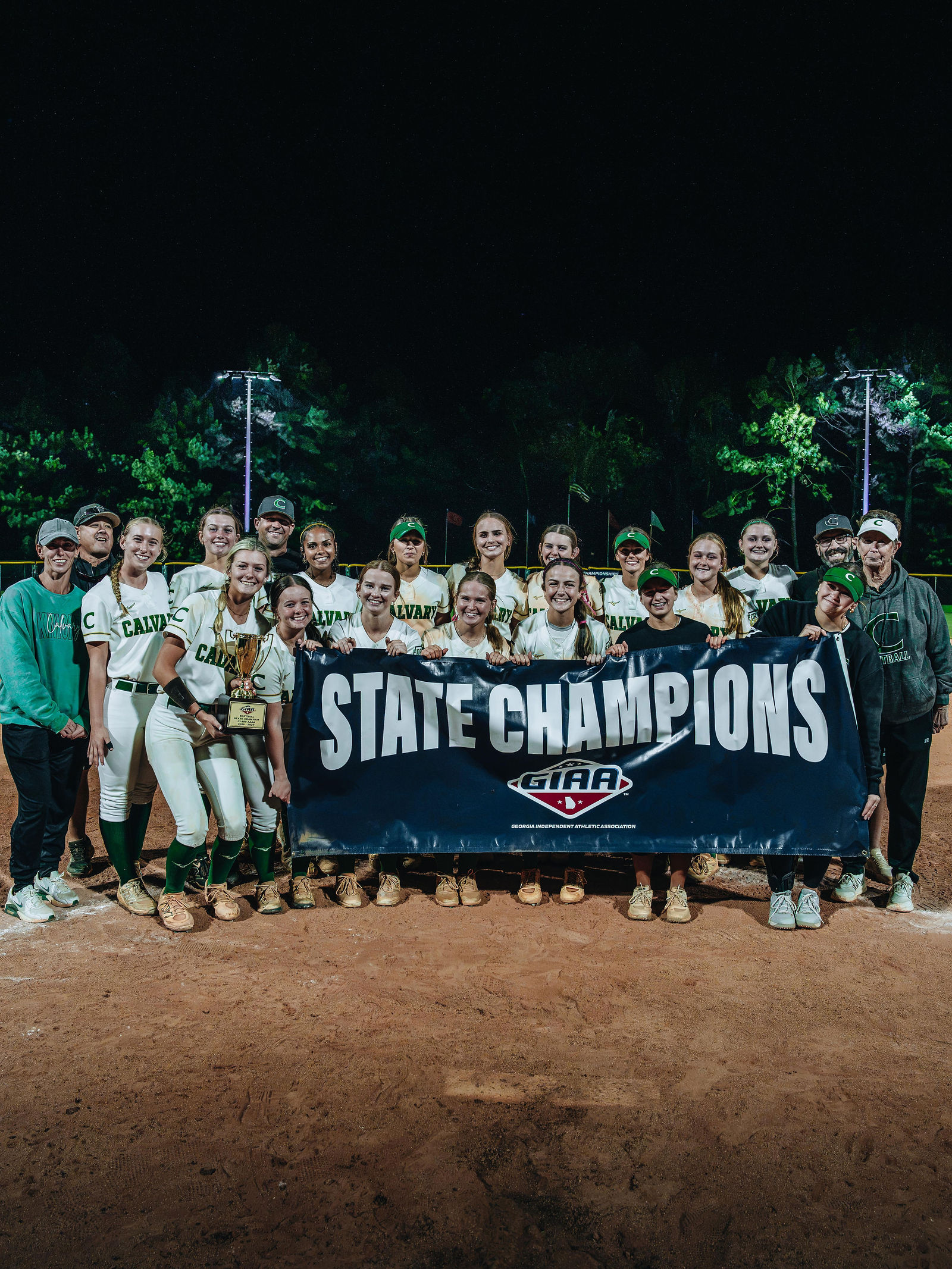
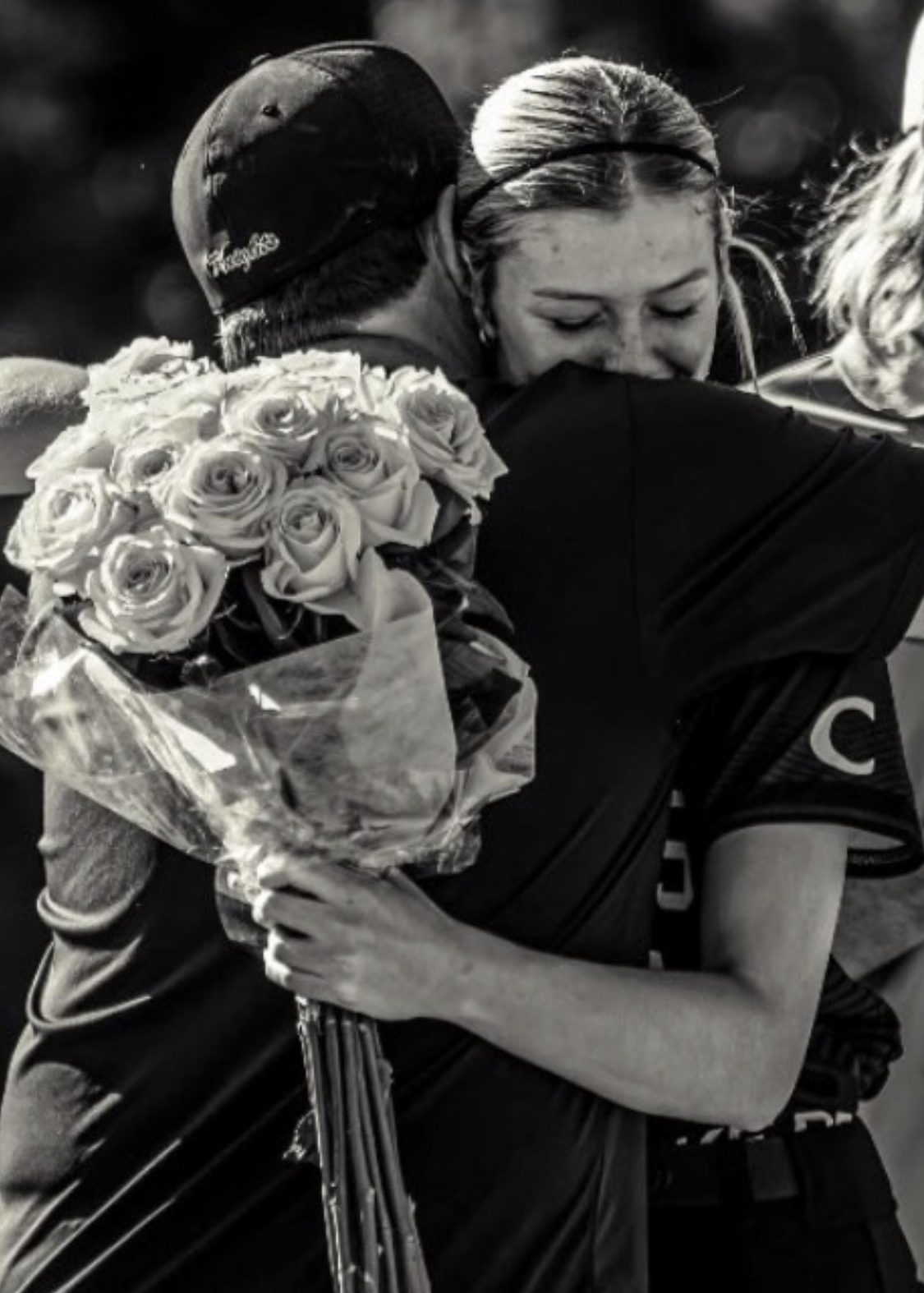
The Lady Knights answered three deficits to repeat as GIAA AAAA champions, finishing a 25–3 season with a young roster, a shared belief and one unforgettable farewell for senior Kendall Gumm.
Apparently, Calvary likes a little suspense with its state championships.
A year ago, the Lady Knights dropped the opening championship game before beating Strong Rock Christian in the deciding contest to claim the GIAA Class AAAA title.
On Saturday, the defending champions returned to familiar territory. Tattnall Square Academy had taken the first game of the championship round. Calvary would need to win one more to keep its trophy.
Then the Lady Knights made things even more interesting.
They fell behind in the first inning. They fell behind again in the second. After pulling even in the fifth, they surrendered the lead once more in the sixth.
By the bottom of the seventh, Calvary was down to its final opportunity to answer.
The Lady Knights answered with a double, a bunt, another double and, eventually, a sprint home that ended the season exactly where they had hoped.
Ellie Stokes scored on a wild pitch with Kendall Gumm at the plate, completing a 4–3 comeback and securing Calvary’s second consecutive state championship.
A team with only one senior and three juniors finished 25–3. Its three losses came against Class 6A Lee County and Tattnall Square, which split two regular-season meetings with Calvary before forcing Saturday’s deciding game.
There was nothing easy about the final victory.
There was, however, something familiar about how these girls handled it.
“I kept reminding the girls to just keep playing, and we even talked about how we were in the exact same situation the year before,” head coach Jeff Halstead said. “I kept telling them our moment was coming and that we had not had any breaks yet, but our break was coming so just keep playing hard and trusting in that.”
One more answer
Calvary’s first response came from a freshman.
With two outs and runners at first and second in the bottom of the first, Ally Halstead drove a double down the left-field line. The ball struck the fence, bringing home a run and tying the game at 1–1.
Her coach had watched her settle into a productive stretch over the final weeks of the season and into the playoffs. In that moment, he liked Calvary’s chances.
“When she hit it, I thought it had a chance to get out, but it hit the fence and bounced right back to the left fielder so we were only able to score the runner from 2nd base,” Halstead said. “Either way, it still turned out to be a huge momentum swing in the game and a big first run on the scoreboard for us.”
It also kept Calvary close against a team that was making every inning a challenge.
The Lady Knights needed another timely swing in the fifth. Trailing 2–1, they got it from Gumm, whose single up the middle brought home the tying run.
Calvary’s lone senior had helped extend the championship fight in the final game of her high school career.
By the sixth, the Lady Knights were behind again, 3–2. This time, their next response would have to come with almost no room left.
Halstead said the circumstances never changed the mood in his dugout.
“These girls never lost the belief that we were going to win the game,” he said. “They were high fiving, saying ‘let’s go,’ and just trusting in each other the whole time.”
Most of the players had been together since middle school. Their confidence had developed through years of practices, games and situations that required them to depend on one another.
Saturday tested that trust. According to Halstead, it never broke.
“I think we all knew Tattnall was playing incredibly well and was giving us all we wanted, but it never felt like there was a moment where we lost hope,” he said.
Before the seventh, there was no elaborate speech. Halstead delivered the usual reminders, then headed toward the third-base coaching box.
Along the way, he prayed.
“I’m not someone who thinks God has a favorite team and that He wants us to win, but I did want Him to know that we would trust Him either way,” Halstead said.
That perspective is part of the program’s foundation. Halstead talks with his players about faith, about enjoying the opportunity in front of them and about continuing to play without knowing how a game’s story will end.
This one still had plenty left.
Belle Graham came off the bench and opened the seventh with a pinch-hit double to right field.
Stokes followed with a push bunt, reaching on a single and moving Graham to third. The tying run was now 60 feet from home, and the winning run was aboard.
For Halstead, the bunt was the turning point.
“My favorite memory of the 7th inning was actually the push bunt by Ellie Stokes,” he said. “When that happened, it was at THAT moment that I truly believed we would win.”
Stokes advanced to second on defensive indifference, bringing Maddie Davis to the plate with both runners in scoring position.
Davis had struggled offensively that night. Halstead’s confidence in her remained intact.
“As for Maddie, the moment is never too big for her,” he said. “She’s a competitor.”
Davis delivered a double to center field. Graham scored, tying the game at 3–3, while Stokes reached third.
An intentional walk to Charleigh Spann loaded the bases.
That brought Gumm to the plate.
For a team with one senior, there was something fitting about the championship reaching its final moment with her in the batter’s box.
“First of all, I found it very fitting as I watched our only senior, Kendall Gumm, walk to the plate with the bases loaded and the championship game on the line,” Halstead said.
The next pitch skipped into the dirt and past the catcher.
Halstead sent Stokes home.
“I immediately just started yelling for Ellie (Stokes) to go, and I started jumping up and down out of excitement for our girls and what I knew they had now accomplished by winning their second straight state championship,” he said.
Three deficits. One final rally. Another championship.
The work that made the rally possible
The seventh inning supplied the finish. Calvary’s pitching, defense and baserunning had kept that finish within reach.
Spann collected two hits and stole two bases. Ally Halstead also had two hits, and the Lady Knights stole four bases altogether.
“That is Charleigh’s game,” Halstead said. “Her speed and ability to put pressure on the defense with her bunt game are unmatched.”
Calvary also played an error-free championship finale and turned a double play. Every cleanly handled chance helped preserve the opportunity to catch up.
“As for our defense, that is the most important part of the game to us and what we work on the most,” Halstead said. “Everyone loves to hit, but hitting comes and goes, so you better be able to glove it in those times when your offense isn’t clicking.”
In the circle, sophomore Raegan Terry gave Calvary seven innings, struck out three and earned the victory.
She had spent much of the season behind a senior and a junior who handled most of the pitching. In the final weeks, though, Halstead had seen her throwing well enough to feel confident giving her a bigger assignment.
Saturday supplied the biggest one available.
“When I put her in the game, I looked at her and said, ‘This is your time kid. Now, go win us a state championship,’” Halstead said.
Terry smiled and answered, “yes sir.”
Halstead saw a pitcher ready to compete.
Through a close game against a difficult lineup, Terry concentrated on executing pitches and working with coach Jill Carlson. Her teammates handled the defense behind her.
“You could tell she just really focused on executing pitches and trusting Coach Jill (Carlson) to make the right calls,” Halstead said.
Terry’s performance also captured a central truth about Calvary’s championship run: the player carrying the team could change from one day to the next.
McKenzie Jones had been dominant throughout the season and had shined during Thursday’s and Friday’s tournament games. Saturday was more difficult for Calvary’s ace.
Terry and Gumm helped pick up the pitching effort, giving the Lady Knights a way through the day.
Jones’ season remained a major reason Calvary had reached that opportunity. According to Halstead, she averaged more than two strikeouts per inning and continued developing the movement that made her so effective.
“She has really refined her craft and become one of the most dominant spin pitchers in the entire state,” he said.
Jones will return as a senior next season. Halstead is eager to see what comes next, both at Calvary and beyond.
“She’s an absolute stud in that circle, and she just continues to get better every single year…and on top of all of that, she’s a GREAT kid and a GREAT teammate,” he said.
On Saturday, those teammates had an opportunity to return the support.
Terry’s complete game allowed Calvary to keep answering. The final rally gave her performance its championship ending.
“A lot of stock will be put into what we did offensively in that last inning, but without Raegan stepping up in that game, we don’t win the championship,” Halstead said.
A role worth waiting for
Graham’s championship day began with a place in the starting lineup and ended with a different assignment.
She went 3-for-4 across Saturday’s two games, scoring three runs and driving in two. In the opener, she hit a two-run home run in the fourth inning.
Her success against that pitcher was familiar. Graham had also homered against her during the regular season, helping convince Halstead to start her in Saturday’s first game.
For the finale, he held Graham back.
It was a deliberate decision to preserve an offensive option for a late situation. When Calvary reached the seventh inning needing a run, that option became the beginning of its comeback.
“She was the one who got it all started in the 7th inning with the clutch pinch-hit leadoff double to get the rally going,” Halstead said.
The moment fit the player he had come to know.
“First of all, Belle Graham is one of the best teammates and one of the most selfless people I have ever coached,” he said.
He described someone willing to fill whatever role the team needed and eager to encourage everyone around her. Saturday required her to contribute in two different ways. She produced in both.
“What a moment for our team, and what a moment for her…and she deserved that moment as well as all of her success this season because she is so selfless and is truly a team first kid who will do whatever it takes for us to be successful,” Halstead said.
Ally Halstead added another example of the young roster’s ability to deliver. The freshman went 4-for-7 over Saturday’s two games and stole two bases, contributing both immediate offense and a glimpse of what Calvary can bring back.
The future holds promise. Saturday demonstrated how much work it will take to keep winning.
Halstead credited Tattnall Square and coach Jordan Brooks for pushing Calvary to the edge.
“Those girls played their tails off and pushed us to the brink, and they were equally deserving to win a championship based on how they played towards the end of that tournament,” he said.
The closeness of the finish gave his players another lesson to carry forward.
“Championships are earned and they are never easy,” Halstead said.
One last time with Kendall
For most of Calvary’s roster, Saturday’s championship becomes part of the experience they will bring into another high school season.
For Gumm, it was the final game.
She will move on to Columbus State University, taking a powerful left-handed bat, a left-handed pitching arm and the versatility that also allowed her to contribute in center field.
Calvary will have positions and production to replace.
Halstead will miss the person who filled them.
“I’m going to miss her smile, her sense of humor, and her love for softball and life,” he said. “Kendall and I have developed a very close relationship over the past couple of years, and both my wife and I have grown to love her like a daughter.”
Her place within this young team carried responsibility. Gumm was Calvary’s only upperclassman in 2025 and its only senior this season. Halstead challenged her to become a leader, and he watched her embrace that role on and off the field.
“Kendall Gumm is one of the most steady people I know, regardless of age,” he said.
Some of his favorite examples came when attention turned toward her individual accomplishments.
In interviews and media appearances, Halstead noticed Gumm finding ways to acknowledge her teammates. When given an opportunity to talk about herself, she talked about the girls beside her and how much she valued taking the field with them.
“Kendall is a perfect example of a true leader because I believe real leaders always take more than their share of the blame and less than their share of the credit,” Halstead said. “That’s who Kendall is, and we are going to miss her more than she will ever know.”
Her influence, he believes, will remain with the program long after the next lineup is written.
She showed younger players what working toward a college opportunity could look like. She also set an example through her faith, her schoolwork and the way she treated people.
“I think we will see her influence on this program for many years to come, not just 2027,” Halstead said. “She will leave behind a legacy at Calvary and an example for so many young ladies to follow for many years into the future of this program.”
He hopes she takes that same faith and championship mindset to Columbus State. He is looking forward to watching her compete there and seeing the next stage of a journey he helped shape.
For now, her Calvary career has an ending worth keeping.
A fifth-inning single that brought her team even. One last trip to the plate with the bases loaded. A teammate racing home with the championship run.
The final game demanded contributions from across the roster, and that suited the senior who so often directed attention toward everyone else.
Calvary entered the season as defending champions. It finished with another trophy, a 25–3 record and a young team that had learned how to win together under the greatest pressure its season could offer.
Gumm leaves as part of that story—and part of the people who will carry it forward.
“Beyond her incredible talent on the field, Kendall is simply an amazing young lady in every aspect of her life,” Halstead said. “She has definitely left an impression on me and on our entire program that will last a very long time.”
Calvary’s lone senior, Kendall Gumm, embraces head coach Jeff Halstead during Senior Night on Sept. 17, 2026. Gumm capped her high school career a month later by helping the Lady Knights win their second consecutive GIAA Class AAAA state championship. Photo courtesy of Coach Jeff Halstead.
Behind every uniform, team meal and maintained field is a bill—and an opportunity for alumni to give back.
A football helmet. A dozen baseballs. A meal before an away game. Even the detergent used to wash uniforms.
The price of high school athletics reaches well beyond the ticket purchased at the gate. Behind the games are expenses that coaches, families and volunteers must find ways to cover, often through fundraising that receives far less attention than the final score.
“When I first started volunteering I had no idea of how much money it cost to run the baseball team” says Jason Elrod, president of the Northside Patriots Baseball Booster Club from 2021 through 2024. “That was very eye opening.”
His experience reflects a central theme in interviews conducted with a local coach, an athletic director and previous and current booster club leaders: providing students with an athletic experience requires resources—and people willing to help secure them.
For school alumni, that need presents an invitation. The programs that helped shape your memories are working to create those same opportunities for another generation. They could use your help.
The bills behind the game
Player fees can seem like a substantial deduction from a family’s budget. Yet those payments may cover only part of a program’s expenses.
“The fees the players pay each year covers about 1/3 of the overall cost,” Elrod says of his experience at Northside.
Fundraising helped meet the remaining needs while supporting improvements to facilities and the game-day experience. During his tenure, booster purchases included baseballs, rakes, winter rye grass, batting-cage nets, uniforms and turf for the hitting facility. The club also supported locker room renovations, concession equipment, meals and hotel rooms for away games.
Elrod credits the school system with helping where it could, while explaining that many needs still depended on fundraising.
“Without a good booster club a lot of those things wouldn’t be possible,” he says.
Northside baseball head coach Tracy Powell sees that support in the daily care of his players. Boosters provide meals when the team travels out of town and protein bars for local games.
“At Northside our booster club has been phenomenal during my three years,” Powell says.
He also points to an expense spectators can easily overlook: maintaining the field.
“The one that I feel that gets overlooked by most is the cost of maintaining a good playing surface for your players,” Powell says.
Mower fuel, equipment maintenance, labor, weed-control treatments and winter rye seed all belong in that budget. Even baseballs illustrate the change: Powell recalls paying approximately $30 for a dozen game balls in 1996 and estimates that the cost has nearly doubled.
The playing surface fans admire and the supplies athletes use reflect spending long before the first pitch.
Different schools, different pressures
At Russell County, athletic director Larry Knox describes an arrangement in which each sport must generate its own operating funds.
“At Russell County, each sport is responsible for raising the funds necessary to operate its program from the beginning to the end of each school year,” Knox says.
Football and basketball do not subsidize the other teams, he explains. Financial planning and fundraising consequently become responsibilities for each coaching staff.
Knox says operating costs have increased significantly over the past four years. The department has added teams, more programs have advanced to state playoffs, and uniforms and equipment have become more expensive. Postseason success creates additional travel, meals and other expenses.
Adding opportunities also requires a commitment beyond announcing a new team.
“We must ensure that we have the financial resources to support the program adequately and provide student-athletes with a positive and meaningful experience,” Knox says.
In his interview, Knox reports that Russell County currently has no booster clubs supporting its athletic programs. He sees their potential value, provided volunteers and coaches work toward shared goals.
“For a booster club to be effective, there must be dedicated individuals willing to invest their time and effort into raising funds for the team,” he says.
Elsewhere, a source identified here as Current Local Booster Club President describes a football program that depends on boosters for expenses spectators might assume the school covers.
“Our booster club covers all of our football program’s expenses, including many things people might assume the school pays for: uniforms, helmets, footballs, field paint and other essential equipment,” the president says.
That responsibility extends to meals, snacks, drinks, laundry detergent, banquets and senior gifts.
The president also describes financial limitations among families.
“Many families simply do not have the income to cover the costs of athletic participation.”
These interviews reveal a stark difference in funding arrangements and different levels of support. They also show why community involvement matters: a program’s needs do not disappear when its families have limited money to contribute.
Volunteers pay a price, too
Money is only part of the equation.
Someone must organize the fundraiser, coordinate volunteers, communicate with coaches and keep the work moving.
Elrod says sharing those responsibilities made his role manageable.
“I was extremely lucky to have a great group of parents that had different strengths,” he says. “The group as a whole made my job much easier.”
The Current Local Booster Club President describes a more difficult experience. Conversations with parents about helping rarely lead to participation.
“Getting people to commit their time remains one of our biggest challenges, and we need more consistent participation to support our student-athletes,” the president says.
Alumni support has also been limited, despite the efforts of a small group that regularly attends games.
“But we need broader involvement at our events, in fundraising and whenever our programs need help,” the president says.
That is an opening for former students to return with a purpose. Graduation does not end someone’s ability to contribute, and having a child on the roster should never be a prerequisite for caring.
A wider circle of volunteers can spread the work. Alumni can become part of that circle.
Give the next generation something to remember
For alumni wondering where to begin, contact a coach, athletic director or booster club leader. Ask what the program needs most.
It may be money for equipment or help serving a team meal. It may be a concession shift, assistance organizing a fundraiser or professional skills in bookkeeping and communications. Alumni who own businesses can explore sponsorships or coordinate an appropriate contribution with the school.
These are practical ways to turn school pride into something students can use.
The purpose reaches beyond winning. Elrod does not view financial resources as necessarily creating a major competitive gap at the high school level, but he believes they matter to the experience athletes receive.
“I do believe that financial resources from booster clubs can make a huge difference in an athlete’s experience while playing ball at the high school level,” he says.
The Current Local Booster Club President expresses a similar hope for students facing challenges at home.
“Athletics should give these kids opportunities to grow, build confidence and succeed, but that takes resources.”
Alumni know what it means to belong to a school. Many can still name the coach who challenged them, the teammates who became friends or the season they will never forget.
Today’s students deserve the chance to build memories of their own.
The next time your school’s teams ask for help, answer with something concrete. Give what you can. Offer your time. Bring another alumnus with you.
There was a time when the gridiron belonged almost exclusively to the boys. The helmets, the shoulder pads, the marching bands, and the roar of the crowd were all part of a football tradition that has defined communities across the Chattahoochee Valley for generations.
But something is changing.
Across the region, a new generation of athletes is taking the field, throwing touchdowns, making game-saving defensive stops, and building traditions of their own. They aren’t wearing helmets or shoulder pads, but make no mistake about it. These young ladies are playing football, and they’re proving they belong.
Girls flag football is no longer simply an emerging sport. It’s becoming an important part of the high school athletic landscape, creating opportunities that barely existed a few years ago.
And here in the Chattahoochee Valley, the evidence of that growth can be found in two programs at very different stages of their journeys.
At Columbus High School, head coach Chris Grier has spent seven years building the Blue Devils into a championship-winning program that has helped establish the standard for excellence.
Just a few miles away, Calvary Christian School head coach JD Roberson is experiencing the excitement, challenges, and growing pains of building something entirely new.
One program is defending a tradition. The other is creating one.
Together, they tell the story of a sport whose future may be even brighter than its remarkable beginning.
But before either program could build its own tradition, someone had to open the door. In 2019, the Atlanta Falcons approached Muscogee County Schools about joining a Georgia pilot program intended to bring girls flag football into the state athletic association. Jeff Battles, then the district’s citywide athletic director, saw a chance to give female athletes another stage on which to compete.
“We have some amazing young female athletes in our school district who have excelled at a variety of sports, and this was one area where I knew we could succeed,” Battles recalled.
The first challenge was winning support from school administrators. Student interest surveys helped make the case, and professional development sessions prepared coaches to teach a game with rules different from tackle football. Battles remembers visiting practices before the first games and seeing players and coaches committed to learning.
“Everyone was serious, everyone was trying to learn and get better. That is when I knew that this was going to be good for our schools,” he said.
BUILDING A STANDARD
When Chris Grier accepted the challenge of leading Columbus High School’s inaugural flag football team in 2019, there was no established blueprint for success.
There were no championship banners to defend, no generations of former players to lean on, and very little certainty about what the sport might eventually become.
What Grier did have was a passion for football and an opportunity to introduce a group of young women to something new. “My love and passion for the game of flag football is really what drew me to it,” Grier recalled. “I saw an opportunity to share that passion with a group of young ladies who were getting the chance to be part of something brand new.”
The response was immediate.
More than 60 girls tried out for that first Blue Devils team. Only 20 could make the roster.
With limited preparation time and an entirely new group of athletes, Grier and his players quickly discovered that building a successful program would require more than simply putting talented athletes on the field.
It would require trust, commitment, and a willingness to embrace individual roles.
What followed was nothing short of extraordinary.
Columbus High captured both the inaugural Muscogee County championship and the Atlanta Falcons Flag Football Championship. Even more remarkable, the Blue Devils completed their entire Muscogee County School District schedule without allowing a single point.
They outscored their opponents 256–0.
For a first-year program, it was an astonishing accomplishment.
But perhaps the most important achievement of that inaugural season wasn’t found on the scoreboard.
It was the culture that began taking shape.
“We had over 60 girls try out, but we were only allowed to keep 20,” Grier explained. “We didn’t have much time to prepare, so we had to learn quickly, figure out everyone’s strengths, and put athletes in positions where they could be successful.”
That first team graduated 12 seniors, leaving just eight returning players to carry the program forward.
Rather than allowing the loss of so much experience to derail their momentum, those returning athletes became the foundation for everything that followed.
They understood what winning required. More importantly, they understood the responsibility of passing those expectations to the next group.
Seven years later, that formula continues to produce results.
The Blue Devils have compiled an impressive 107–19 record, according to Grier’s latest figures, establishing themselves as one of the area’s most accomplished flag football programs. But Grier believes the program’s sustained success has less to do with individual talent than with the expectations established from the beginning.
“Every year we have new faces, but the standard doesn’t change,” he said. “We’ve had some incredible athletes come through our program, but I think our success has been just as much about the girls buying into something bigger than themselves.”
For Columbus High, winning has become an expectation.
But the program’s greatest victories may be taking place long after the final whistle.
MORE THAN A GAME
For generations, young football players have dreamed of using their athletic abilities to earn college scholarships.
Until recently, that dream wasn’t nearly as accessible to girls who wanted to play football.
Flag football is helping change that.
As opportunities expand beyond the high school level, successful programs like Columbus High are demonstrating that the sport can become a legitimate pathway to higher education.
Four former Blue Devils have continued their flag football careers at the collegiate level.
Jamiese Spivey moved on to Emmanuel University, Serenity Hickman to Warner University, Cydnee Redd to Midland University, and Ashley Sajous to Huntingdon College.
Hickman has even experienced championship success beyond high school, becoming part of Warner University’s 2026 collegiate national championship program.
For Grier, those accomplishments represent something much more meaningful than another trophy.
“When we started this program in 2019, opportunities like these were extremely limited,” he said. “Now we’re watching young ladies earn scholarships and compete at the next level.”
And then there is the remarkable story of Alexandria Lofton.
A standout athlete at Columbus High, Lofton took her talents far beyond the Chattahoochee Valley, earning a place on Team USA’s Junior Olympic flag football team.
According to Grier, she was the only girl selected from Georgia.
She went on to represent the United States on the international stage and returned home with a gold medal. Think about that for a moment.
A young woman who began playing a sport that was still finding its footing at the high school level eventually represented her country and became an international champion.
Lofton received offers from every collegiate flag football program she pursued before ultimately accepting a full scholarship to Boston College to play soccer.
Her story illustrates just how dramatically the opportunities available to female athletes are changing.
For Grier, it also reinforces the purpose behind the program he started seven years ago.
“Championships are special, but helping these girls create opportunities for their futures is what it’s really about.”
That philosophy extends beyond athletic scholarships and championship trophies.
At Columbus High, accountability, discipline, teamwork, and personal development remain central to the program’s identity.
Grier wants his players to become successful young women, regardless of whether they ever play another down of football after graduation.
And while Columbus High has already established an impressive legacy, other schools throughout the Valley are beginning to write their own stories.
A NEW CHAPTER FOR THE KNIGHTS
While Columbus High has spent years building a championship tradition, Calvary Christian School is discovering what it means to start from scratch.
The Knights launched their inaugural flag football program this fall, joining the growing number of schools recognizing the sport’s potential.
For head coach JD Roberson, the journey actually began several years before the team’s first official practice.
Calvary had discussed adding flag football for two or three years. Strong participation in the school’s powder-puff football games and elementary intramural flag football activities suggested there was already considerable interest.
Eventually, school leadership decided to find out just how much.
An interest survey produced overwhelmingly positive responses, providing the encouragement needed to move forward. Even with that enthusiasm, getting the program off the ground wasn’t without challenges.
Changes within the athletic department contributed to a delayed startup process, and the team didn’t begin practicing together until mid-August.
A second interest survey in July and a subsequent meeting drew more than 30 interested students.
For Roberson, the numbers confirmed what the school had suspected all along.
The girls wanted an opportunity to play.
And once that opportunity arrived, the challenge became transforming a group of enthusiastic newcomers into a competitive football team.
“This program has been a labor of love for sure,” Roberson said.
Without the benefit of a summer practice schedule, the Knights faced a steep learning curve.
Players had to learn offensive formations, defensive responsibilities, route concepts, and the split-second decision-making that separates successful plays from missed opportunities.
Roberson embraced the challenge.
Rather than sheltering his young team from difficult opponents, he deliberately scheduled strong competition to accelerate their development.
His goal was to have the Knights prepared for GIAA competition, even if that meant enduring some frustrating early results.
And while the scoreboard hasn’t always reflected the progress being made, Roberson sees improvement with each passing week.
That progress recently produced a milestone the Knights will never forget.
Their first varsity touchdown.
THE TOUCHDOWN THAT MEANT EVERYTHING
For an established program, a touchdown might be just another six points.
For a team playing its inaugural season, it can mean something entirely different.
It represents countless hours of practice, mistakes corrected, lessons learned, and the realization that all the hard work is beginning to pay off.
Calvary’s breakthrough came against a talented, undefeated Shaw team. The Knights had come close to scoring in previous games, only to see promising drives stall because of a missed read, a dropped pass, or another small mistake.
But this time, facing fourth down, Calvary’s quarterback delivered the throw the team had been working toward.
And suddenly, the Knights had their first touchdown.
For Roberson, the play represented more than a successful offensive possession.
It was proof that his players were beginning to understand the game.
“Once the QB made that big throw on 4th down, I knew that it finally clicked,” he recalled.
Calvary operates an option-style offense that places considerable responsibility on its quarterback to recognize defensive alignments and make the correct decisions.
Those skills take time to develop, particularly for players who are still learning the sport.
But against Shaw, Roberson saw the results of weeks of preparation.
“I was just proud of them,” he said. “I see the potential of what they can do, and they have trusted the process every week.”
Despite facing an undefeated opponent with exceptional speed, the Knights remained competitive and continued battling until the end.
Afterward, Roberson delivered a message designed to reinforce the team’s progress.
“You girls gave them everything they could handle until the very end… we are right where we need to be.”
It’s a philosophy that places development ahead of immediate results.
Roberson believes the wins will eventually come.
For now, the focus remains on improving one play, one practice, and one game at a time.
“We don’t even look at the scoreboard; we just focus on doing our best every single snap, and the rest will unfold as it should.”
For Calvary, that first touchdown was a small piece of history.
But for the girls who scored it, and the coaches who helped make it happen, it was also a glimpse of what might be possible.
A COMMUNITY BEHIND THE GAME
Starting a new athletic program requires considerably more than finding players and a coach.
There are schedules to coordinate, equipment to secure, games to organize, and countless responsibilities that often go unnoticed by those watching from the stands.
Battles saw those behind-the-scenes demands firsthand during Muscogee County’s launch. He credits then-Superintendent Dr. David Lewis with helping secure coaching supplements, equipment, and other resources to give the new programs a sustainable foundation. School administrators bought in, coaches learned the sport, and athletes put in the work.
“Enough cannot be said about the effort our athletes and coaches put into preparing for each practice and competition,” Battles said.
At Calvary, Roberson has discovered that building a program is truly a community effort.
School administrators have attended home games, while parents involved in other sports have stepped forward to assist with game-day operations.
That support has helped ease the burden of establishing an entirely new team.
“The school community has rallied behind the team as Calvary does in every endeavor,” Roberson said.
For a program still in its infancy, that encouragement matters.
It provides the players with a sense that they are part of something important, something the entire school is willing to support.
Roberson believes the continued involvement of the Calvary community, affectionately known as Knight Nation, will be essential to the program’s long-term success.
But his goals extend beyond victories and losses.
Calvary’s athletic philosophy is closely tied to the school’s Christian mission, and Roberson views flag football as another opportunity to help young women develop their character, strengthen their faith, and prepare for life beyond high school.
“The opportunity to just be themselves,” he said when asked what he hopes the sport provides his players.
He wants those who dream of competing at the collegiate level to have every opportunity to pursue that goal.
At the same time, he hopes every player leaves the program having learned valuable lessons about perseverance, responsibility, and overcoming adversity.
“After graduation, I want them to look back and see how they matured, excelled, failed, learned, and kept going no matter what the game of life threw at them.”
It’s a perspective remarkably similar to the one Grier has embraced at Columbus High.
Despite the difference in their programs’ histories, both coaches understand that the true value of high school athletics cannot always be measured in wins and losses. THE NEXT GENERATION The rise of girls flag football represents something larger than the addition of another sport to the high school calendar.
It represents opportunity.
For some athletes, it offers a chance to compete in a game they have loved for years but previously had few opportunities to play.
For others, it provides an entirely new athletic experience, one that might uncover talents they never knew they possessed.
And for a growing number of young women, it offers a potential pathway to college athletics and opportunities beyond their hometowns.
In Muscogee County, that pathway now begins well before high school. Battles says the district has expanded flag football into its middle schools, with regular-season schedules, playoffs, and a championship game. Elementary school clubs have also introduced fourth- and fifth-graders to the sport.
“I believe the early interest will allow the area to continue to be successful at the state level,” Battles said. And with colleges increasingly offering scholarships, he believes young players have even more reason to keep developing their skills.
The success of Columbus High demonstrates what can happen when a school invests in the sport and gives its athletes the resources, coaching, and support necessary to succeed.
The arrival of Calvary’s program demonstrates something equally important.
The interest is still growing.
And the sport’s future will depend on both established programs continuing to raise expectations and new programs finding the support needed to get started.
Grier believes the next phase of growth must include expanded opportunities for younger athletes.
More youth programs. More competitive opportunities. More college scholarships. And continued investment from schools and communities.
“Flag football has grown tremendously, but I still think we’re just scratching the surface,” he said.
It’s an observation that should excite anyone who cares about the future of high school athletics in the Chattahoochee Valley.
Because if the sport has already produced championship programs, collegiate athletes, and an international gold medalist in such a relatively short time, imagine what the next generation might accomplish.
Imagine the young girl attending her first flag football game this fall, watching a quarterback throw a touchdown pass or a defender make a game-saving stop.
Imagine her realizing, perhaps for the first time, that she could be the one making those plays someday. That’s how traditions begin.
And that’s how sports grow.
MORE THAN A FLAG
At first glance, Columbus High and Calvary Christian School might appear to have very little in common when it comes to flag football.
One is a proven winner with championship credentials, an extraordinary record, and former players competing at the collegiate and international levels.
The other is a first-year program celebrating milestones that established teams might take for granted.
But look beyond the records and the accomplishments, and the similarities become impossible to ignore.
Both programs began with girls who simply wanted an opportunity to play.
Both are led by coaches who believe their responsibility extends far beyond teaching offensive plays and defensive schemes.
And both are helping establish a future in which young women throughout the Chattahoochee Valley have more opportunities to compete, develop, and pursue their dreams.
Seven years ago, Chris Grier couldn’t have imagined everything his Columbus High program would eventually accomplish.
Today, JD Roberson is standing near the beginning of that same journey, watching his Knights discover what they are capable of becoming.
There will be more touchdowns.
More championships.
More college opportunities.
But perhaps the most important accomplishment has already happened.
Girls throughout the Valley are being given another opportunity to step onto a football field, compete for their schools, and create something that belongs to them.
The flags may be small, but the opportunities they represent are enormous.
And across the Chattahoochee Valley, those flags are flying higher than ever.
Muscogee County’s football teams face a new challenge on the road to November. All eight Muscogee County School District football programs moved into higher classifications under the GHSA’s 2026–28 realignment. With local talent divided among multiple schools and new schedules featuring established contenders, the district faces the possibility of finishing without a playoff representative.
GHSA’s classification formula counts each student living outside a school’s assigned attendance zone as three students. That adjustment can increase a school’s classification enrollment without increasing its actual student body or football roster. Northside moved from 4A to 6A; Columbus, Hardaway, Shaw and Spencer moved from 2A to 4A; and Carver, Kendrick and Jordan moved from 2A to 3A. The enrollment formula and revised classification boundaries changed their competitive surroundings, but did not automatically provide additional players or resources.
For MCSD’s four 4A teams, talent distribution is an important concern. Communities feeding fewer high schools can concentrate more of their football talent in a single program, helping maintain depth and continuity from one season to the next. Muscogee County’s players are spread across eight district programs. That comparison varies by opponent—Dougherty County, for example, has Dougherty, Monroe and Westover—but it raises a fair question about whether similar classification counts reflect similar football talent pools.
Northside’s assignment illustrates the difficulty of the transition. Its new region includes Langston Hughes, which appeared in three of the five state championship games played from 2021 through 2025, winning in 2022. Creekside enters as the 2025 Class 4A state champion, while private-school contender Woodward Academy reached the 6A championship game in 2023. Northside must navigate a region containing programs with recent experience competing on the state’s biggest stage
The postseason selection process adds another variable. GHSA’s Post Season Rankings formula now selects and seeds playoff teams across classifications, with region champions receiving automatic berths. Carver’s difficult non-region schedule illustrates the challenge: the Tigers faced 7A opponents Douglas County and South Gwinnett, 5A Southwest DeKalb and 4A Douglass of Atlanta. A victory in any of those contests would have strengthened Carver’s playoff case, but the Tigers were unable to secure a win in those four games. Their clearest opportunity now comes through region play, which begins October 15 against Kendrick. Winning the region would guarantee Carver a playoff berth despite those non-region losses. Meanwhile, Jordan’s non-region schedule makes it ineligible, leaving seven district programs pursuing postseason spots.
November will reveal whether Muscogee County can turn this difficult transition into a postseason opportunity. Carver’s recent championships show what local players and coaches are capable of, but moving up in classification does not create more talent, deeper rosters or additional resources. If the district is left out of the playoffs, the final standings will tell only part of the story. These teams are being asked to meet a higher competitive standard with the same foundations—and the players carrying that challenge deserve their community’s support through the final whistle.